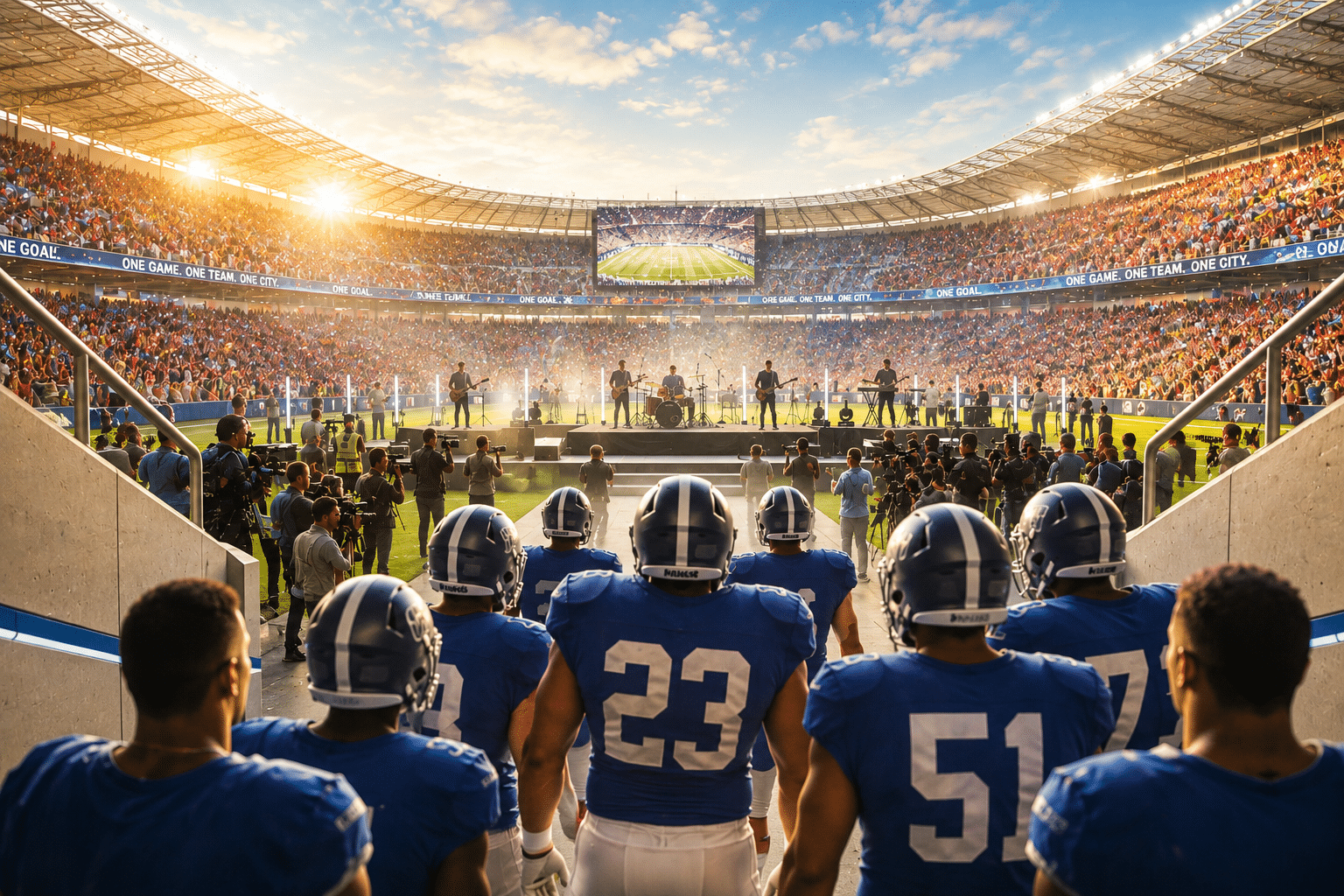
How Music Creates Anticipation, Identity, Emotion, and Lasting Memories
Why Every Great Sporting Event Needs Great Music
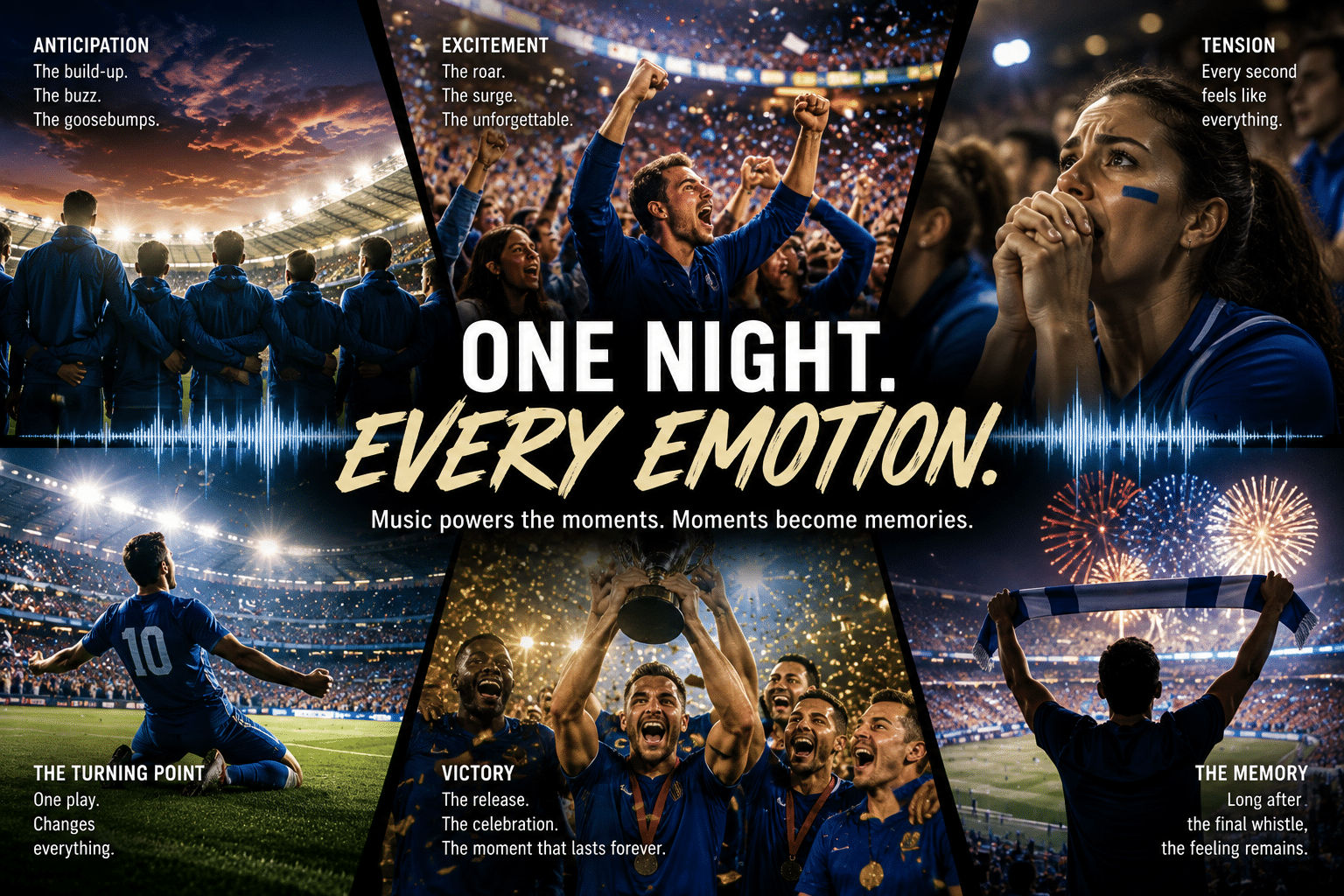
The greatest sporting events are remembered through images: an athlete crossing the finish line, a championship-winning touchdown, a decisive goal, a last-second basketball shot, or a driver taking the checkered flag.
But those memories often have a soundtrack.
Music plays before the athletes appear, while teams enter the field, during breaks in competition, across television broadcasts, inside promotional campaigns, and throughout the celebrations that follow. It signals that something important is about to happen. It raises the energy in the stadium, gives broadcasters an emotional vocabulary, and helps audiences remember an event long after the final result has been recorded.
This is not accidental.
The organizers of the world’s greatest sporting events understand that competition alone does not create a complete cultural experience. Sport supplies the action. Music helps audiences feel its meaning.
From the Olympic Games and the Super Bowl to the FIFA World Cup, UEFA Champions League, March Madness, and NASCAR, music transforms athletic competition into entertainment, ceremony, community, and shared memory.
Music Tells the Audience How to Feel
Every major sporting event contains periods of anticipation, tension, celebration, and reflection. Music helps distinguish those moments from one another.
Before the competition begins, an energetic song can increase excitement and prepare the audience for action. A ceremonial anthem can communicate history, dignity, and importance. During a break, familiar music can maintain the energy of the crowd. After a victory, the right song can turn an individual achievement into a communal celebration.
Music does not determine how people feel, but it can focus and intensify the emotion already present.
A close game becomes more dramatic when the stadium sound changes as the final minutes approach. A team entrance feels larger when it is accompanied by a carefully chosen anthem. A championship montage becomes more moving when music connects dozens of separate images into a single emotional story.
Without music, many of these moments would still be meaningful. With music, they become memorable.
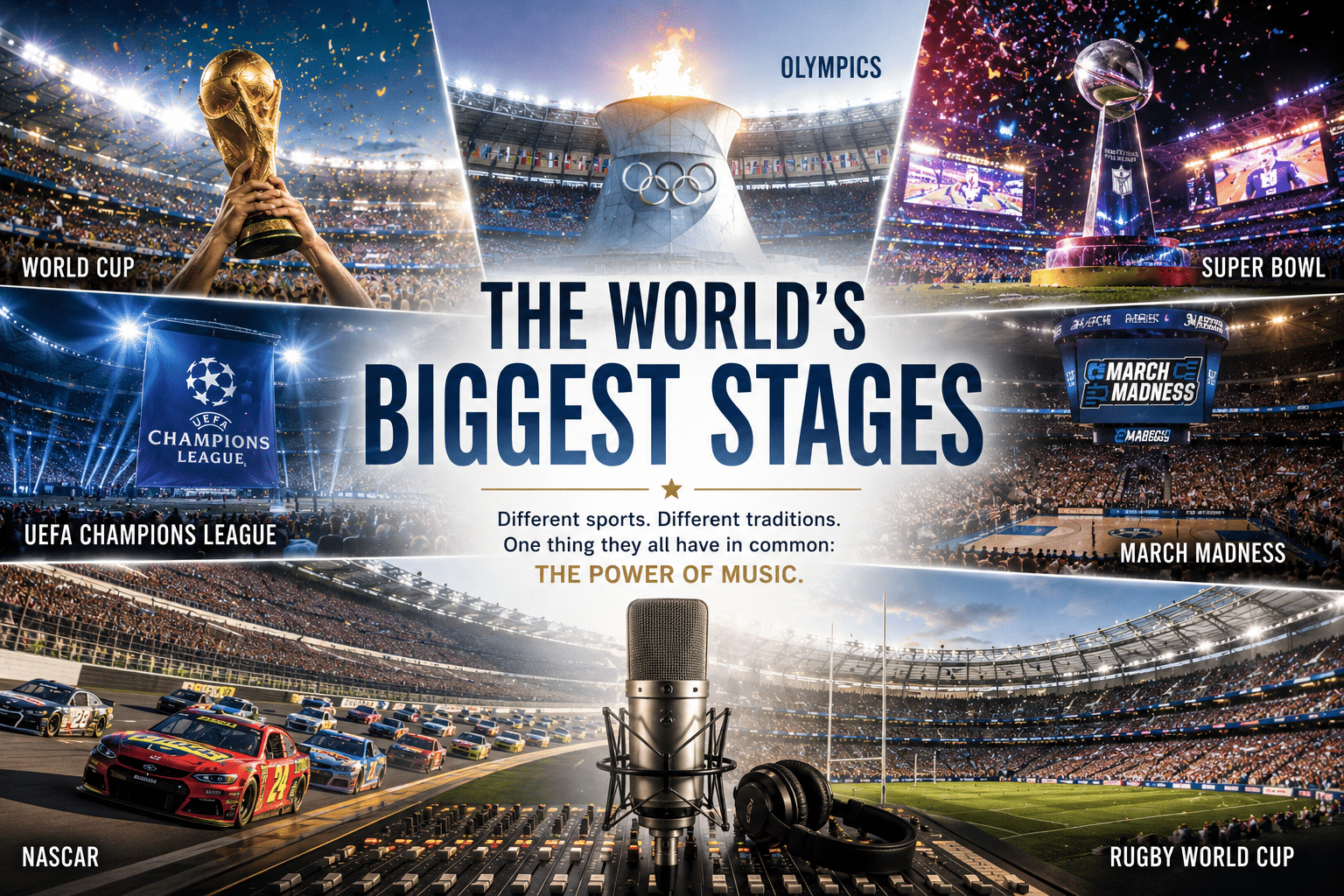
The Olympic Games: Music as Ceremony and Shared Humanity
The Olympic Games offer one of the clearest examples of music giving sport a sense of history and global purpose.
The Olympic Anthem was first performed at the opening ceremony of the modern Games in Athens in 1896. The International Olympic Committee describes it as the oldest property associated with the modern Olympic Games. Its continued use demonstrates the extraordinary ability of music to preserve institutional identity across generations.
Olympic music extends far beyond the official anthem.
Opening and closing ceremonies use orchestras, popular performers, choirs, dancers, composers, and local musical traditions to introduce the host country to the world. These productions must welcome athletes from many nations while presenting the culture, history, and aspirations of the host.
That requires music to work on several levels at once.
It must be ceremonial without feeling distant. It must represent a particular country while remaining accessible to an international audience. It must support spectacle while also leaving room for moments of reflection.
The music accompanying the parade of nations, the arrival of the Olympic flag, the lighting of the cauldron, and the closing of the Games gives each moment its emotional character.
The athletes may be competing against one another, but the music of the ceremonies reminds viewers that they are also participating in something shared.
This is one of music’s most valuable contributions to sports. It can preserve the competitive intensity of an event while emphasizing the humanity connecting everyone involved.
The Super Bowl: When the Game Becomes a Cultural Event
The Super Bowl demonstrates how music can expand a championship game into a much larger entertainment experience.
Millions of viewers are interested in the football, but the event also attracts audiences who are drawn to the performances, commercials, celebrity appearances, and cultural conversation surrounding the game.
The halftime show has become a major entertainment property in its own right. Over the years, it has featured performers such as Prince, Michael Jackson, Madonna, U2, Paul McCartney, the Rolling Stones, Bruce Springsteen, Beyoncé, Shakira, Jennifer Lopez, Dr. Dre, Snoop Dogg, Eminem, Mary J. Blige, and Kendrick Lamar. The NFL now treats the halftime production as a central part of the Super Bowl’s international appeal rather than merely a break between two halves of football.
Music is present throughout the event, not only at halftime.
The national anthem establishes ceremony and tradition. Player introductions use music to heighten anticipation. Stadium playlists keep the audience engaged during stoppages. Television producers use music in opening sequences, highlight packages, sponsor presentations, and closing montages.
The result is an event with several overlapping identities.
It is a football championship, a live concert, a television spectacle, an advertising showcase, and a national cultural gathering.
Music is one of the elements connecting those different parts.
The success of the Super Bowl model also illustrates an important business principle: music can help a sporting event reach beyond its core audience. Someone who does not follow the NFL closely may still watch the halftime show, discuss the performance, stream the artist’s music, or share clips afterward.
The music extends the life and reach of the event.
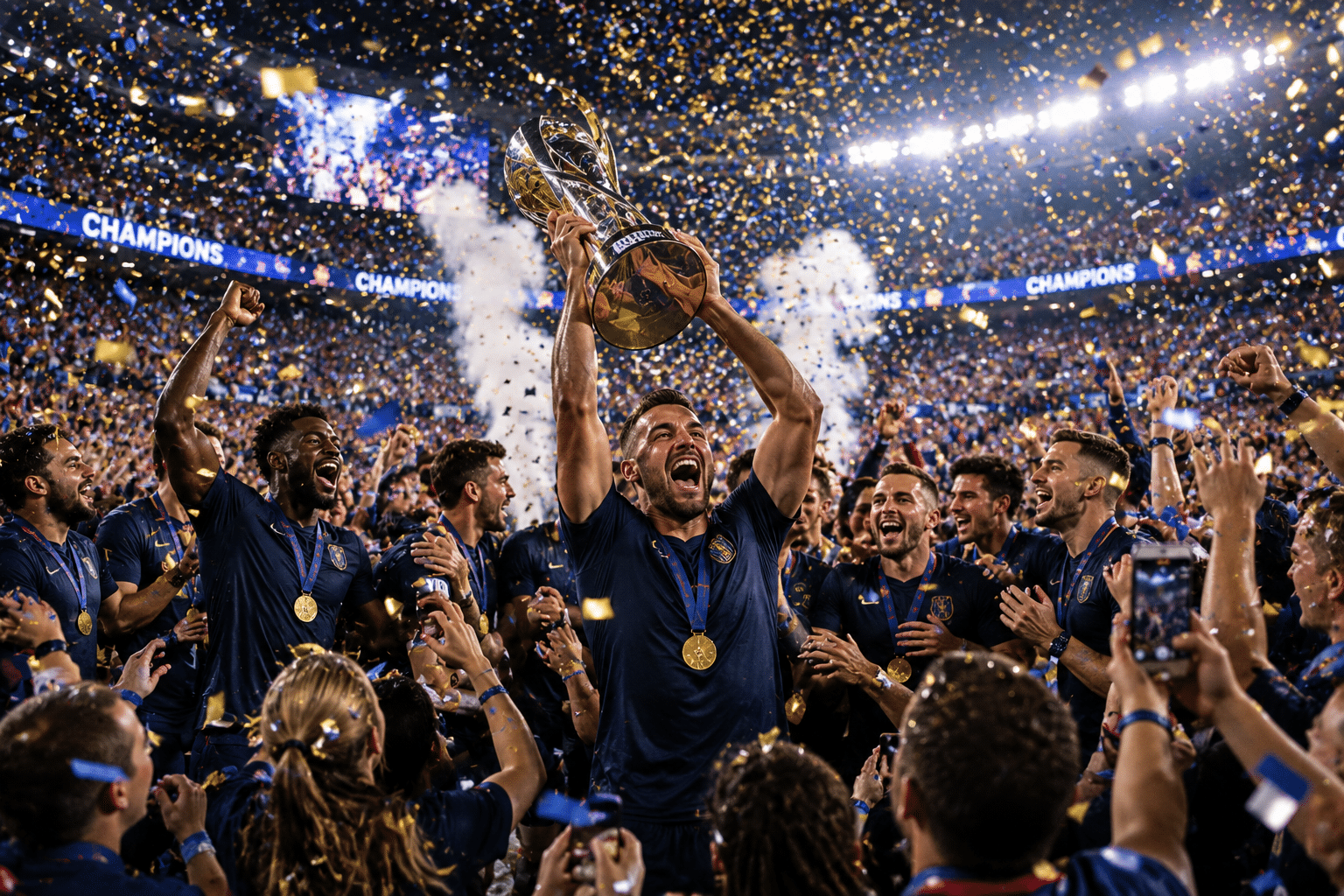
The FIFA World Cup: A Global Tournament Needs a Global Sound
The FIFA World Cup may be the strongest example of sport and music operating as international languages.
Football crosses borders, but so does music. Neither requires every participant to speak the same language in order to understand the emotion being expressed.
World Cup songs help generate anticipation before the tournament begins and give each competition a distinctive identity. Certain releases become inseparable from the years and host countries they represent.
Ricky Martin’s “La Copa de la Vida,” Shakira’s “Waka Waka,” K’naan’s “Wavin’ Flag,” and other songs connected to past tournaments reached audiences far beyond the stadium. They demonstrated that World Cup music could function simultaneously as tournament promotion, international pop, cultural representation, and lasting memory.
The modern World Cup music program also reflects the growth of streaming, social media, international collaborations, and multi-song releases. Instead of relying entirely on one theme played during television broadcasts, organizers can now create a musical ecosystem around the tournament.
That ecosystem may include:
- Official songs and anthems
- Complete albums and playlists
- Opening and closing ceremony performances
- Stadium music
- National-team songs
- Supporter chants
- Sponsor campaigns
- Social-media audio
- Regional releases and remixes
Music gives a global tournament continuity. Teams and matches change from day to day, but recurring songs help make the entire competition feel like one unified event.
UEFA Champions League: The Power of a Recognizable Anthem
The UEFA Champions League shows that a sporting event does not always need a changing pop soundtrack to build a powerful musical identity.
Sometimes one enduring composition is enough.
The Champions League anthem was written by composer Tony Britten and introduced in 1992. Based in part on George Frideric Handel’s “Zadok the Priest,” it uses English, French, and German—the official languages associated with UEFA—to create a ceremonial sound recognized by football supporters around the world. UEFA has continued to present the anthem as one of the defining elements of the competition.
When players line up and the anthem begins, the audience immediately understands the importance of the occasion.
The music communicates prestige before the match has started. It tells players, supporters, and viewers that this is not an ordinary club fixture. It is the Champions League.
That recognition is enormously valuable.
Brands spend years trying to develop a sound that audiences can identify within a few seconds. The Champions League anthem has achieved exactly that. Its melody acts almost like an audio logo.
It also demonstrates why consistency matters.
A sporting event may refresh its graphics, sponsors, broadcast packages, and promotional campaigns. A familiar anthem can preserve continuity through all those changes.
Over time, the music accumulates meaning. Every great comeback, final, upset, and championship performance becomes attached to the same sound.
March Madness: Music Turns a Tournament Into a Story
The NCAA basketball tournament presents a different musical example.
March Madness includes dozens of teams, multiple venues, dramatic eliminations, unexpected victories, and deeply personal moments for athletes and supporters. It can be difficult to reduce such a large tournament to one coherent emotional story.
“One Shining Moment” helps accomplish that.
The song debuted as part of the men’s tournament presentation in 1987 and has traditionally accompanied the closing montage after the championship game. The NCAA describes it as college basketball’s tournament ballad and has continued to use it to revisit the defining moments of each competition.
The montage does more than celebrate the champion.
It recognizes the entire journey: the opening rounds, underdogs, disappointed players, jubilant crowds, coaches, families, decisive shots, and final celebration.
The song brings those disconnected moments together.
This is one of music’s most important storytelling functions. It can take a collection of brief scenes and make them feel like chapters in the same narrative.
Many viewers know what is coming as soon as the first notes begin. That familiarity does not weaken the emotional effect. It strengthens it.
The audience has learned to associate the song with the conclusion of the tournament. Hearing it means that the journey is over and that it is time to remember what happened.
NASCAR: Music Meets Speed, Energy, and American Culture
NASCAR offers another distinctive relationship between sports and music.
A race weekend is not limited to the laps completed on the track. It is a full live-event experience built around anticipation, community, tradition, regional identity, sponsor activity, and entertainment.
Music helps create that environment.
Pre-race concerts, national anthem performances, driver introductions, track playlists, promotional videos, and broadcast themes all contribute to the atmosphere. Rock, country, pop, hip-hop, and regional music can be used to connect with different audiences while reinforcing the energy associated with speed and competition.
The connection works because racing and music share certain physical qualities.
Both rely on rhythm, timing, acceleration, tension, and release. The sound of a race has its own mechanical power, but music helps shape the emotions surrounding that sound.
Before the engines start, music builds anticipation. During breaks, it keeps the audience engaged. In promotional content, it makes the sport feel faster and more dramatic. During victory celebrations, it provides a release after hours of competition.
NASCAR also demonstrates the importance of understanding the audience.
The most effective music strategy is not simply choosing the most famous performer. It is finding music that feels authentic to the event, the venue, the region, and the fans.
When music feels imposed, audiences recognize it. When it grows naturally from the culture surrounding the sport, it strengthens the entire experience.
Music Gives Sporting Events an Identity
A sporting event needs more than a name and logo. It needs a personality.
Music helps create that personality.
The Olympic Anthem communicates history and international unity. The Champions League anthem communicates prestige. World Cup songs communicate global celebration and host-country character. The Super Bowl halftime show communicates spectacle. “One Shining Moment” communicates reflection and closure. NASCAR music communicates speed, energy, and community.
These are not interchangeable functions.
A successful music strategy begins by understanding what the event represents.
Is it ceremonial or rebellious? International or regional? Historic or modern? Exclusive or inclusive? Serious, celebratory, youthful, traditional, or all of these at different times?
The music must answer those questions.
This is why selecting music for a major sporting event is both a creative decision and a branding decision. The songs, artists, arrangements, and performances help define how the public perceives the competition.
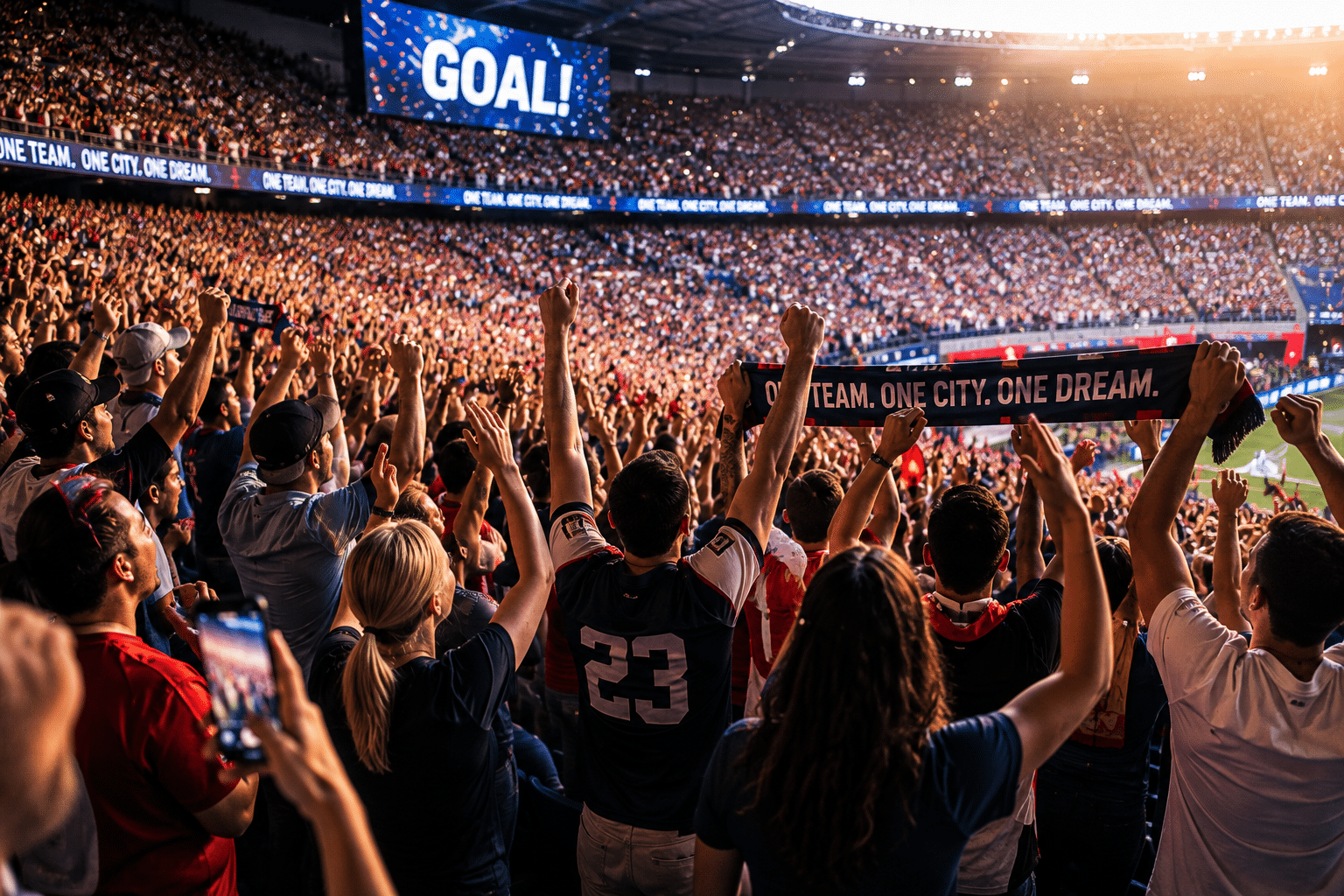
Music Expands the Audience
Great music can bring people into a sporting event who might not otherwise participate.
A listener may discover a tournament through an official song. A fan may attend a race partly because of a pre-event concert. A television viewer may tune into the Super Bowl for the halftime performer and remain for the game. A memorable anthem may become a supporter’s first emotional connection to a competition.
This crossover has enormous value.
Sports organizations compete not only for ticket sales and broadcast viewers, but for attention. Music creates additional points of entry.
It also gives events material that can travel independently of the competition.
A game highlight may be most relevant immediately after it occurs. A song can remain on a playlist for years. A live performance can circulate through video platforms. A ceremonial anthem can be repeated season after season. A soundtrack can reach countries where the sporting event itself has a smaller audience.
Music therefore extends both the geographic reach and the commercial life of sports.
The Business and Rights Behind the Experience
Behind every sporting anthem, halftime performance, broadcast theme, highlight montage, and promotional video is a network of creative rights.
Songs do not enter major events by accident.
They are written, composed, produced, recorded, licensed, distributed, performed, broadcast, and administered. Depending on the use, the process may involve songwriters, composers, publishers, record companies, performers, unions, rights organizations, broadcasters, sponsors, streaming services, and event producers.
The composition and the sound recording are separate forms of intellectual property. A sports organization may need permission to use both. Additional agreements may be required when a song is synchronized with video, performed live, used in advertising, distributed internationally, or included in digital content.
Music publishers are central to this system.
They help administer compositions, represent songwriters, manage licensing, collect royalties, document ownership, and ensure that creators are properly recognized and compensated.
The audience experiences a seamless emotional moment. Behind that moment is a substantial amount of creative, legal, and commercial coordination.
Respecting that infrastructure is essential. Major sporting events benefit from music, but the people who create that music must also benefit from its use.
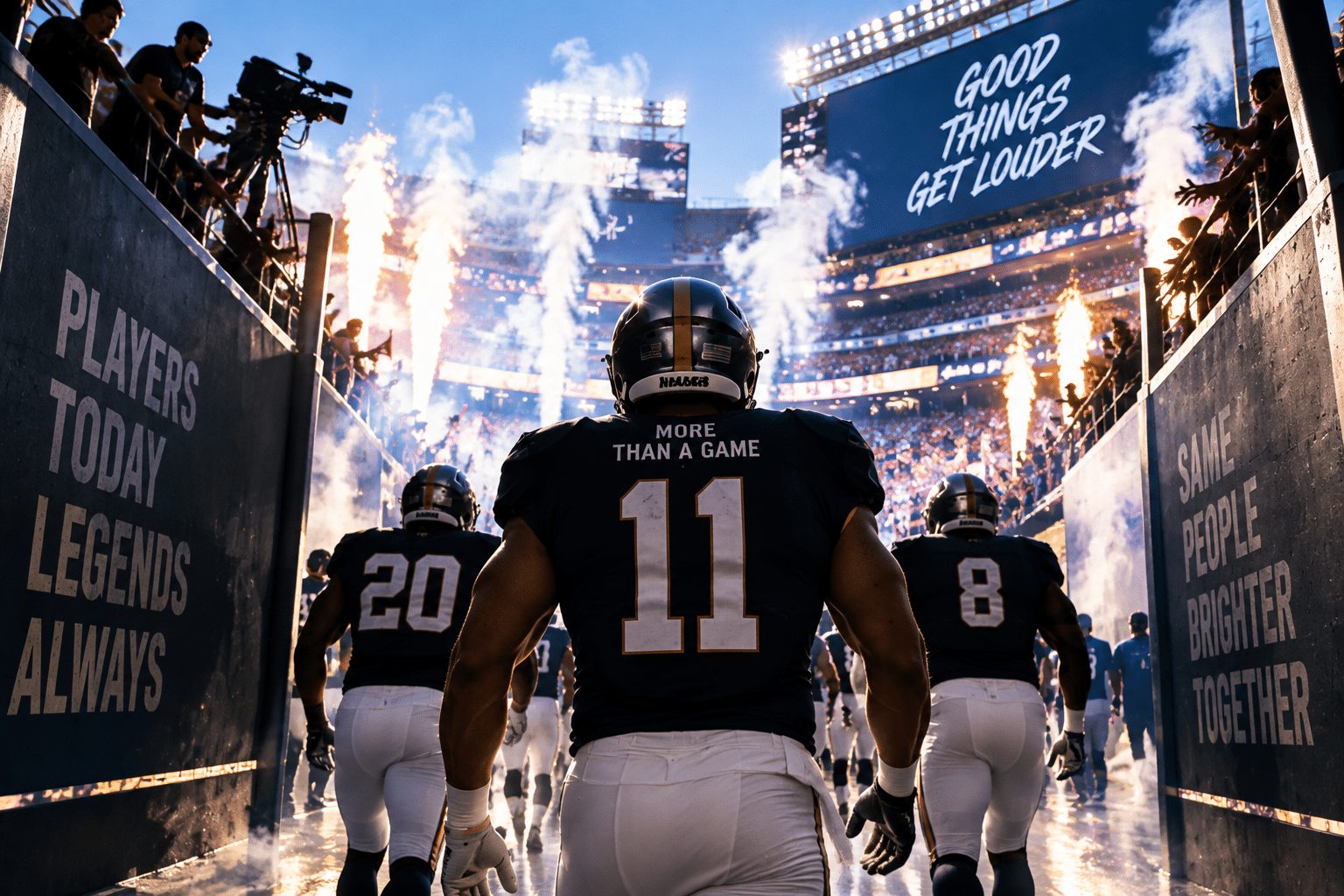
The Best Sports Music Becomes Part of History
A score tells us who won.
Music helps us remember what it felt like.
That distinction explains why music remains so important to sporting culture.
Years after an event, fans may forget the exact date, score, or sequence of play. But a familiar song can bring back the atmosphere immediately: the stadium, the people in the room, the team they supported, the tension they felt, and the celebration that followed.
The best sports music becomes a form of historical preservation.
It carries the emotion of one generation into the next. Younger audiences hear an anthem and inherit some of the meaning attached to it by those who came before them. New performances add new memories without erasing the old ones.
That is why every great sporting event needs great music.
Music creates anticipation before the competition begins. It gives the event an identity while it is happening. It expands the audience beyond dedicated sports fans. It supports broadcasting, branding, and commercial partnerships. Most importantly, it preserves the emotional meaning of the event after the athletes have left the field.
Sport gives us the moment.
Music helps the moment live forever.
Continue Exploring the Connection Between Sports and Music
Read Champion Music Publishers Salutes the Music and Musicians of the FIFA World Cup 2026™ and discover how artists, songwriters, performers, producers, and publishers are helping shape the sound of football’s largest international stage.
Look for the Official FIFA World Cup 2026™ Music Album on Spotify, Apple Music, and other major streaming platforms.
With musical best wishes,
John Francis Krimsky
Founding President
Champion Music Publishers
This article is intended for general educational and commentary purposes and does not constitute legal advice.