How Crowds, Chants, Anthems, and Victory Songs Turn Sporting Events Into Shared Human Experiences
Why Music Connects Fans Across Every Language
After thirteen years with the United States Olympic Committee and fifty years carrying the torch for the for the world's greatest multi-sport events, I have seen many nationalities compete at the Olympic Games.
What I quickly learned is that a crowd does not need a translator to understand when something extraordinary has happened.
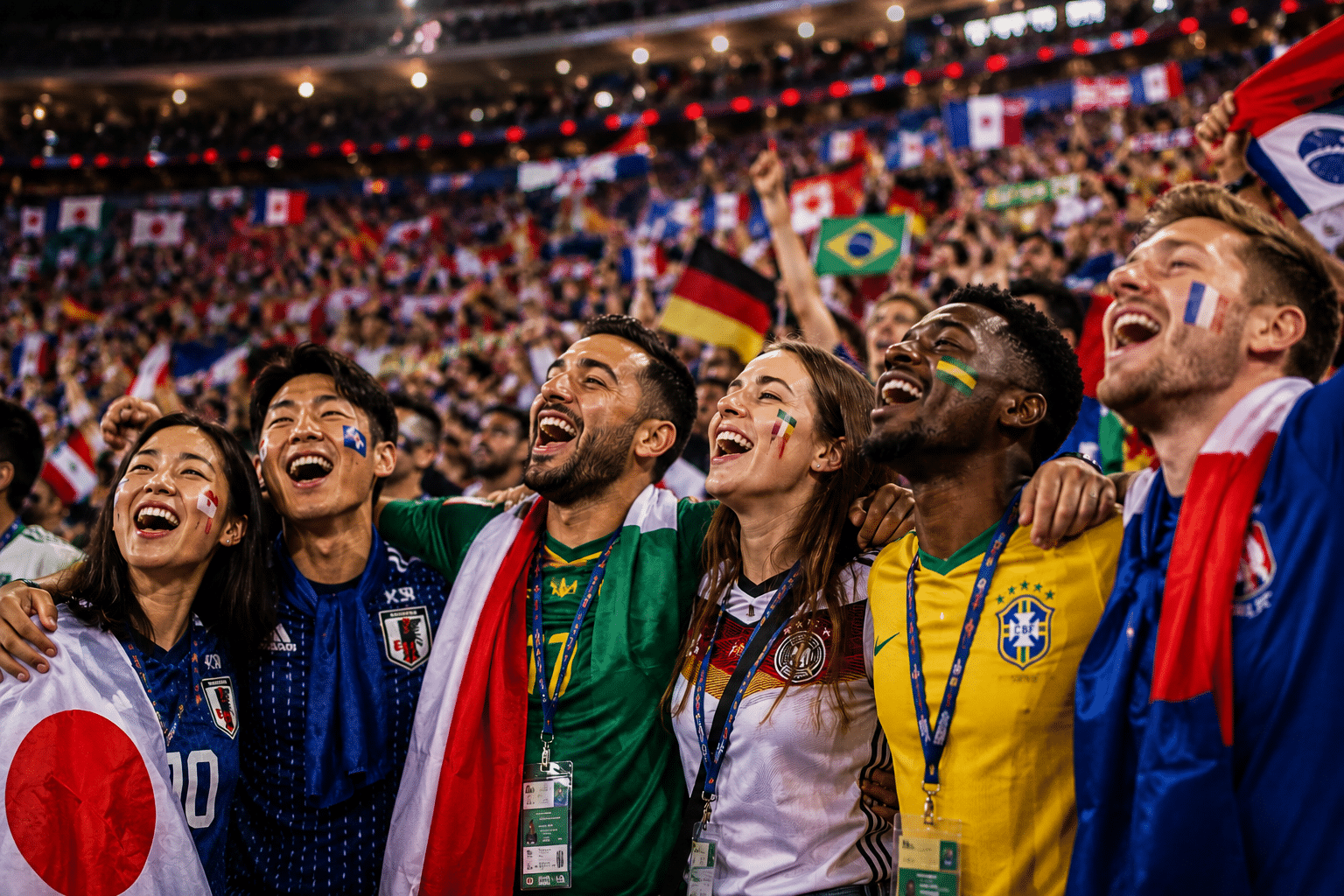
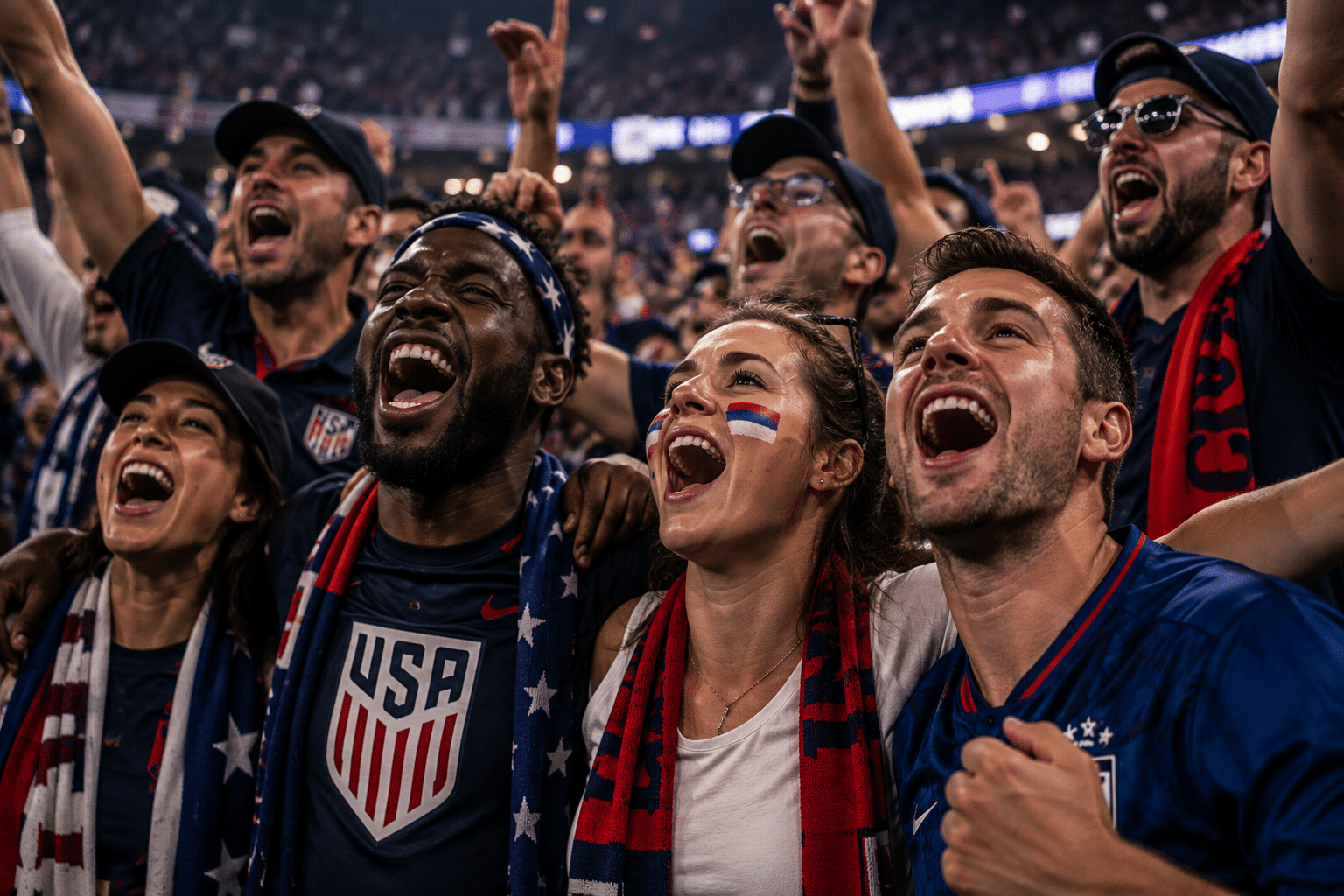
The moment a goal is scored, a championship is won, or an athlete crosses the finish line, thousands of people may react at once. They rise, shout, sing, clap, embrace, and celebrate together. Many of them may come from different countries. They may speak different languages, come from different cultures, and know very little about one another.
Yet in that moment, they understand each other perfectly.
Music has much the same power.
It can communicate excitement before a word is fully understood. It can create a sense of unity before people agree on anything else. It can turn a crowd of strangers into one voice and transform a sporting event from something people simply watch into something they experience together.
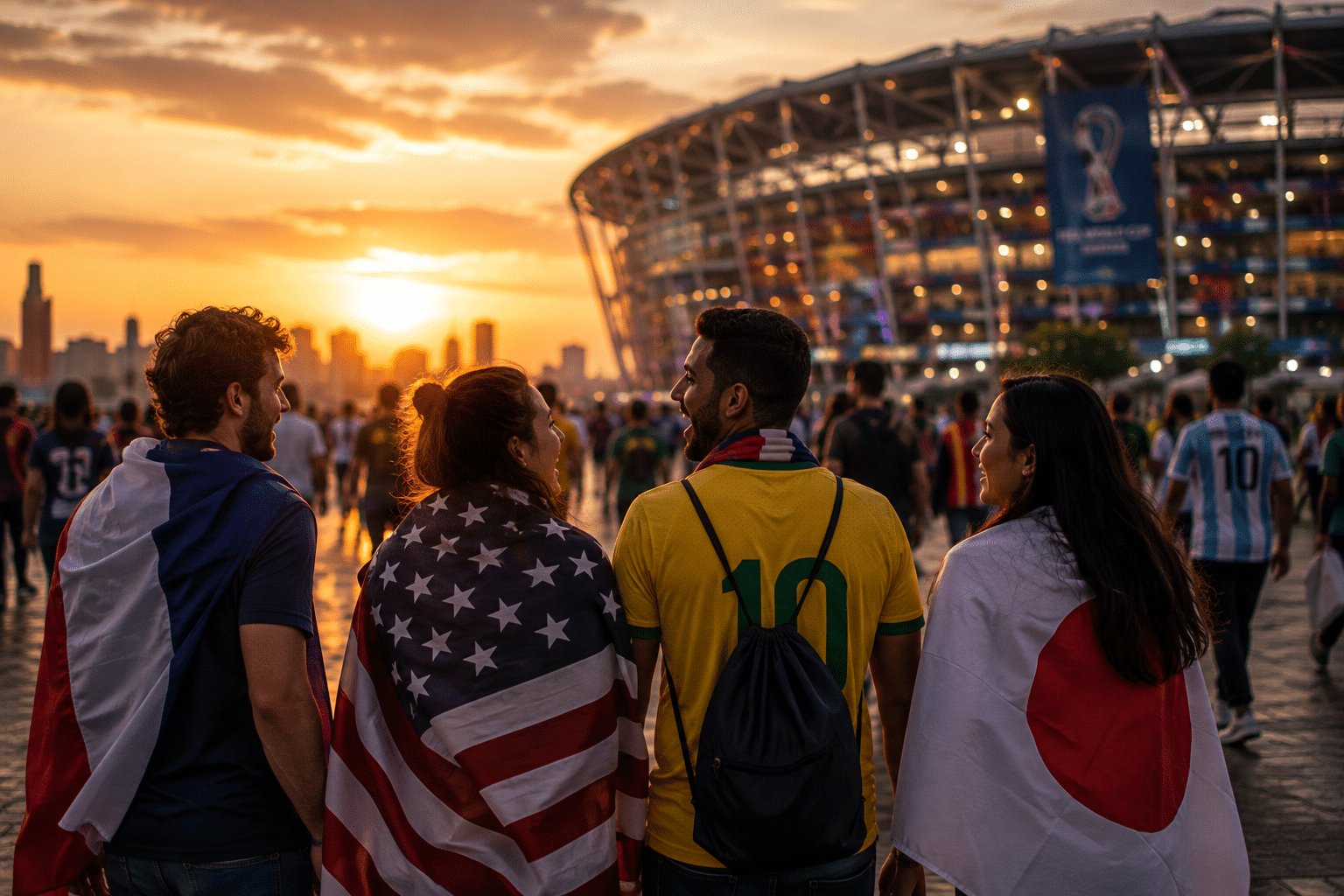
This is why music has always belonged in stadiums, arenas, public squares, ceremonies, and celebrations.
Sport gives people a reason to gather. Music gives them a way to feel together.
Music Reaches Emotion Before Language
Words require interpretation.
A listener must understand the vocabulary, grammar, context, and meaning of a sentence. Music often works more quickly. Rhythm, melody, volume, tempo, repetition, and harmony can communicate emotion before the mind has time to analyze what is happening.
A slow melody can create reflection. A rising arrangement can suggest hope. A driving beat can create urgency. A familiar chorus can produce excitement before the singer completes the first line.
This does not mean lyrics are unimportant. The words of a song can deepen its meaning and connect it to a particular nation, event, or memory. But music does not depend entirely on literal understanding.
A supporter may not know every word of a song being sung in another language. He may still understand whether it expresses pride, defiance, longing, celebration, or hope.
That is one reason music is so effective at international sporting events.
The audience does not need to share one language in order to share one emotion.
The Crowd Becomes an Instrument
There is a profound difference between listening to music privately and hearing it performed by thousands of people together.
A crowd changes the nature of a song.
Individual voices blend into a larger sound. The melody may become less precise, but the emotional force becomes greater. Clapping creates rhythm. Stomping produces percussion. Repeated words become chants. The stadium itself acts as a resonating chamber.
The crowd is no longer merely hearing the music.
It is making the music.
This participation matters because it creates belonging. A person who joins a chant is no longer simply an observer. He becomes part of the event. His voice joins the voices around him, and for a few moments, individual identity gives way to collective identity.
This is one of the great attractions of live sports.
People enter the venue as separate spectators. Music and chanting help turn them into a community.
Why Chants Are So Powerful
Sports chants are often musically simple.
They rely on short phrases, repeated rhythms, familiar melodies, and predictable patterns. That simplicity is not a weakness. It is the reason they work.
A chant must be easy enough for thousands of people to learn quickly. It must survive noise, distance, excitement, and imperfect timing. It must be recognizable even when sung by people with different accents and different levels of musical ability.
The strongest chants often use only a few words.
A team name. A player’s name. A declaration of loyalty. A rhythmic call and response. A melody borrowed from a popular song and adapted by supporters.
Because chants are repetitive, they can grow in power. One section of a stadium begins. Another responds. Soon the sound moves through the venue.
The chant creates coordination where none existed before.
It also communicates identity.
Supporters use chants to say, in effect, “We are here. We belong together. This is who we support.”
That message can be understood even by someone who does not speak the language.
The emotional meaning is carried by the sound itself.
National Anthems and the Weight of Identity
Few moments in sport are more emotionally concentrated than the playing of a national anthem before an international competition.
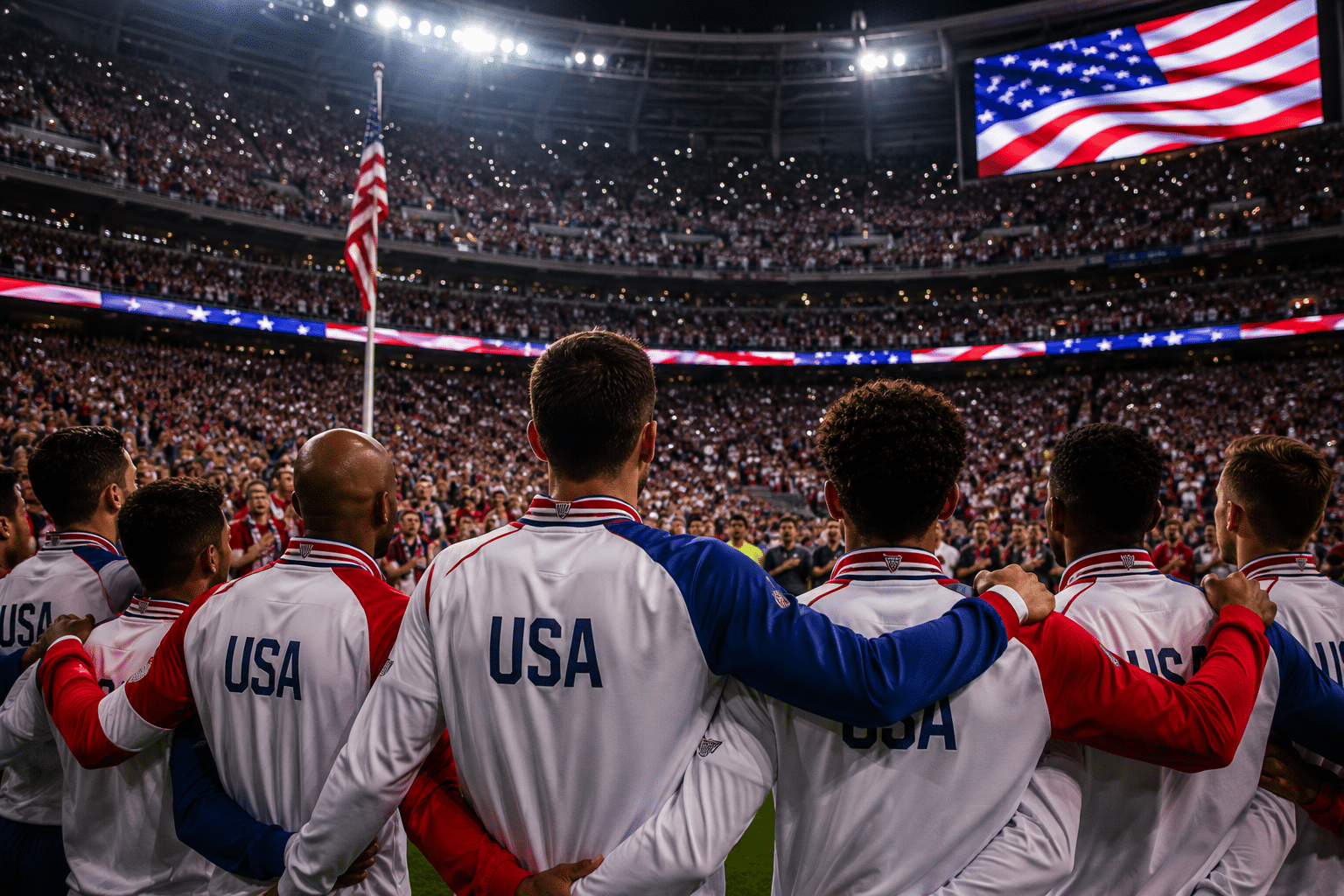
The athletes stand together. The crowd rises. The flag is displayed. Television cameras move across faces that reveal pride, concentration, nervousness, and sometimes tears.
The anthem connects the present moment to something larger.
For the athlete, it may represent years of work, family sacrifice, national expectation, and the honor of representing one’s country. For supporters, it may awaken memories of previous generations, national history, shared values, or personal identity.
National anthems are not merely musical introductions.
They are ceremonies of belonging.
Their power also comes from contrast.
During the match, countries compete intensely. Before the match, each anthem is given space and respect. The ritual acknowledges difference while placing those differences within a shared structure.
Everyone understands what the moment means, even when the words are unfamiliar.
The audience recognizes the posture, the attention, the silence, and the emotion.
Music makes identity visible.
Victory Songs Turn Success Into Celebration
Winning is an event.
Celebration is a ritual.
Music helps transform one into the other.
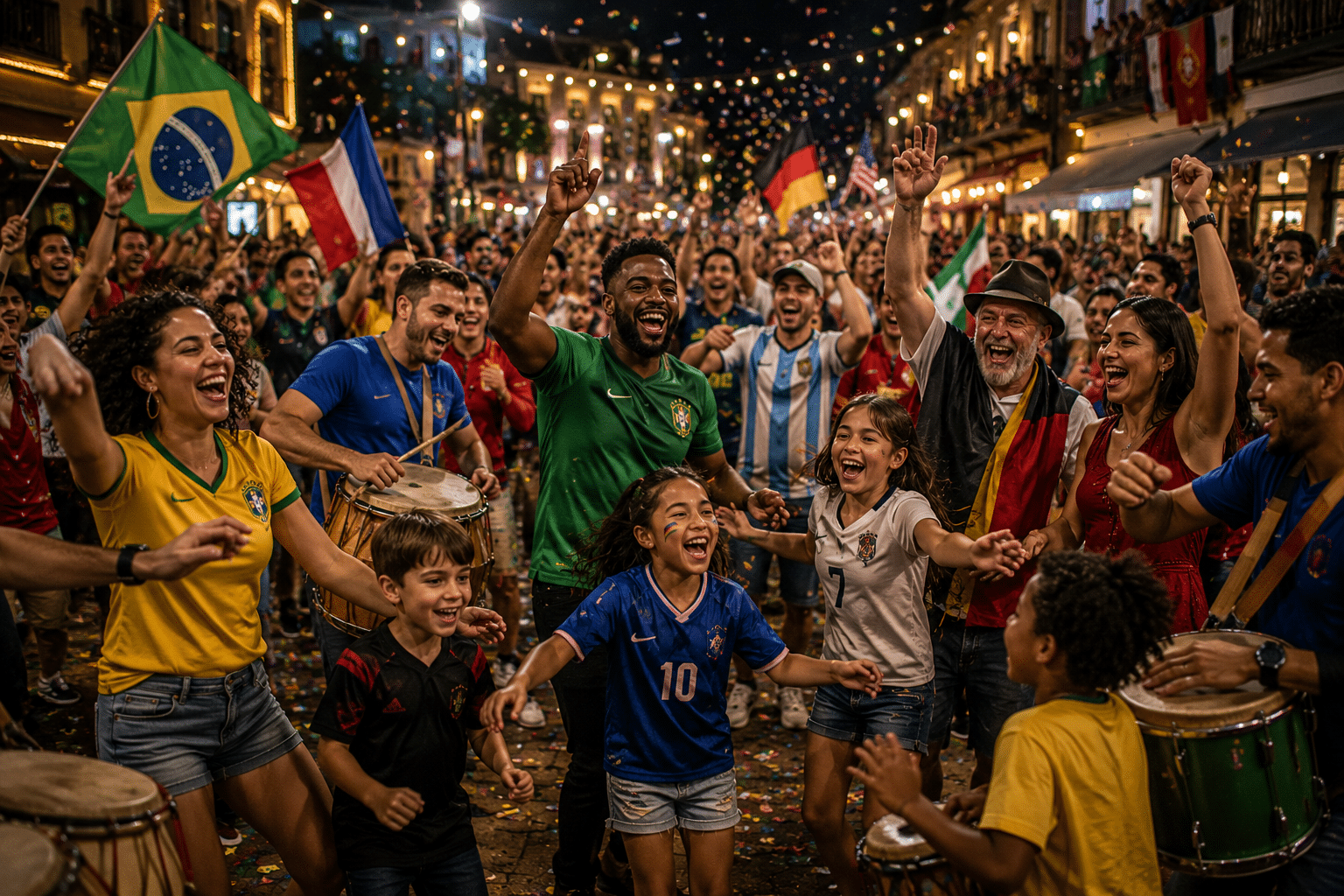
After a championship, supporters do not simply note the result and leave. They sing. They repeat familiar songs. They adopt new songs. They gather in streets, public squares, bars, homes, and stadiums.
A victory song gives the celebration continuity.
It can be sung in many places by people who were not present at the match. It allows the emotional meaning of the victory to move outward from the stadium and into the wider community.
The song may have been written specifically for the team. It may be an older recording adopted by supporters. It may be a popular song whose lyrics take on a new meaning after a championship.
Once that connection forms, the song becomes part of the victory.
Years later, hearing it can restore the feeling of that moment.
This is one reason certain songs remain attached to teams and tournaments for generations. They become more than entertainment. They become historical markers.
Celebrations Create Shared Memory
Sports celebrations are among the few remaining public experiences in which very large groups of people openly express emotion together.
Strangers hug. Families sing. People wave flags from windows and cars. Children learn the songs their parents and grandparents remember from earlier victories.
Music helps carry the celebration across time.
A photograph preserves what the moment looked like. A song preserves what it felt like.
That distinction is important.
Visual memories can become distant. Music often brings emotion back with remarkable speed. A few notes can return a listener to a particular tournament, city, summer, or family gathering.
This is why music is so deeply connected to memory.
The brain does not store every event as a list of facts. It stores atmosphere, sensation, association, and feeling. Music can unlock those associations long after many details have faded.
A victory song is therefore not only part of the celebration.
It becomes part of the archive.
Music Allows Different Cultures to Meet Without Disappearing
The most meaningful international music does not require every culture to sound the same.
Unity is not uniformity.
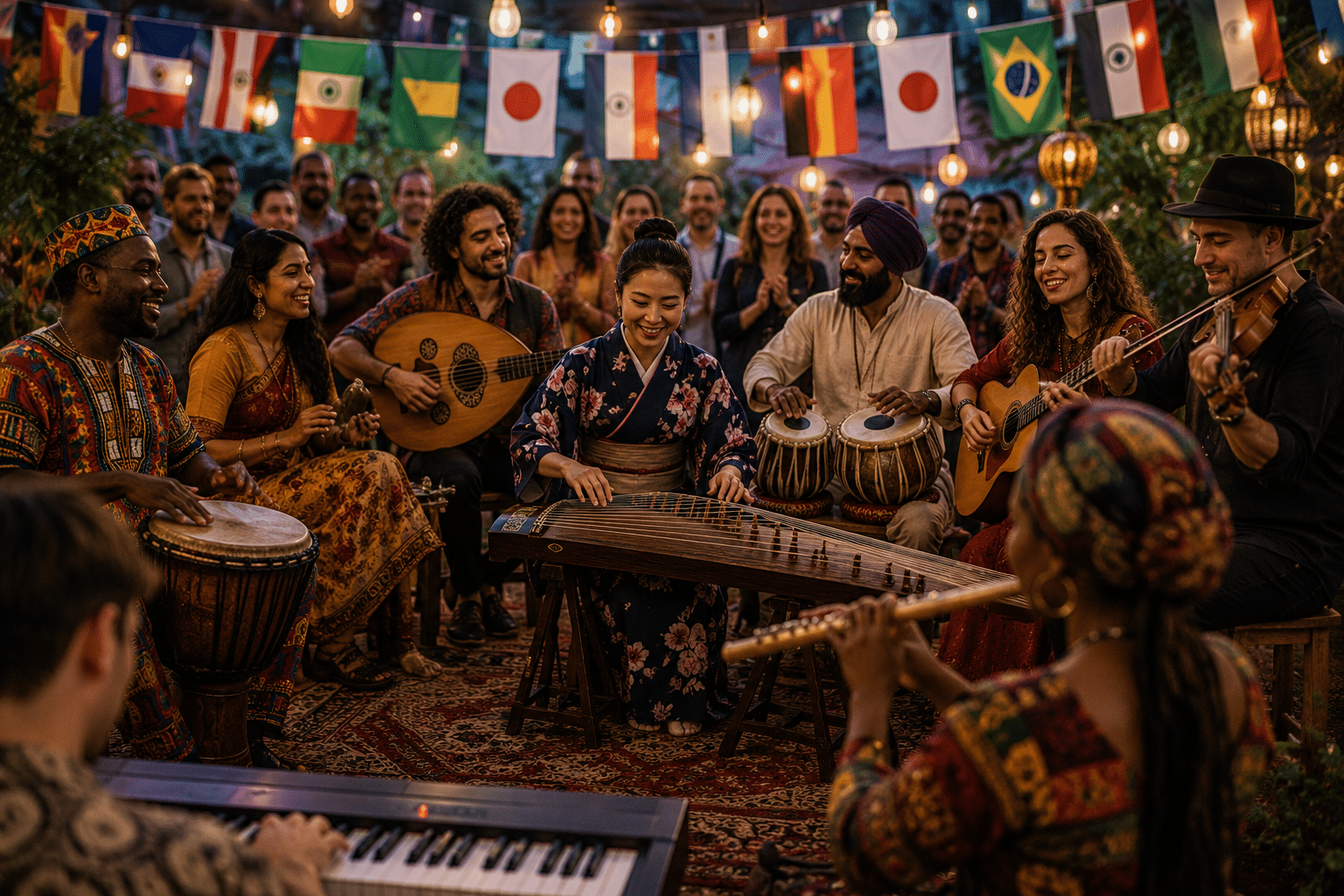
A World Cup, Olympic Games, or international championship becomes richer when different musical traditions are allowed to remain distinct. Drums, horns, choirs, strings, electronic production, folk melodies, regional rhythms, and different languages can all contribute to the same event.
Music creates a meeting place.
Listeners may hear sounds that are unfamiliar, but they can still recognize the emotional purpose. A local rhythm can become part of a global celebration without losing its origin.
This is one of the greatest opportunities created by international sporting events.
They allow host nations to present their musical identity to the world. They allow artists from different regions to collaborate. They allow supporters to encounter cultures through celebration rather than explanation.
The audience may begin with the sport.
Music opens the door to something broader.
The Song Does Not Have to Be Official
Some of the most memorable sports songs are carefully commissioned and promoted. Others emerge organically from the crowd.
This difference is important.
An official anthem can create a strong identity for a tournament. But a supporter-created chant or fan-adopted song can sometimes become even more powerful because it grows directly from shared experience.
It belongs to the people singing it.
That sense of ownership cannot always be planned.
A song may suddenly become connected to a team because of one player, one lyric, one viral moment, or one unexpected victory. Once supporters adopt it, the song begins to accumulate meaning.
The recording itself may not have changed.
The context has.
This is the unpredictable beauty of music in sports. Organizers can commission songs, but they cannot completely control which songs audiences will love, remember, and carry forward.
The public chooses its own soundtrack.
Shared Emotion Is a Form of Communication
When thousands of people sing together, they are communicating something larger than the literal lyrics.
They are saying:
We are present.
We care.
We remember.
We hope.
We belong.
These messages can cross language barriers because they are expressed physically and emotionally as well as verbally.
The volume of the crowd communicates commitment. The repetition communicates unity. The melody communicates mood. The shared timing communicates cooperation.
This is communication in its most elemental form.
It is not precise in the way a legal document or news report is precise. It does not need to be.
Its purpose is not to transmit detailed information.
Its purpose is to make people feel less alone.
Music Humanizes Competition
Sport is built on opposition.
One team wins. Another loses. One athlete advances. Another is eliminated. National pride, commercial pressure, and personal ambition can make competition intense.
Music introduces another dimension.
It reminds audiences that competitors and supporters share many of the same emotions: hope, fear, pride, disappointment, perseverance, and joy.
A national anthem may represent one country, but the tears it produces are universally recognizable. A victory song belongs to one team, but the impulse to celebrate is understood everywhere. A chant may challenge an opponent, but the need to belong exists on both sides of the stadium.
Music does not remove rivalry.
It places rivalry inside a common human experience.
That is why some of the most moving moments in sport occur when supporters from different countries sing together, applaud an opponent, or share a song after the competition has ended.
The result matters.
So does the recognition of one another.
The Music Industry Behind the Shared Moment
The emotional effect may feel spontaneous, but much of the music heard at major sporting events depends on a substantial creative and commercial structure.
Songwriters create the compositions. Performers record them. Producers shape the sound. Publishers administer the rights. Record companies distribute the recordings. Broadcasters, event organizers, sponsors, and digital platforms license and present the music.
When a song is used in a ceremony, advertisement, broadcast, highlight film, stadium presentation, or streaming campaign, different rights may be involved.
The audience hears one song.
Behind it may be a network of creators, rights holders, administrators, and licensing professionals working across several countries.
That system matters because music has value.
It creates atmosphere, strengthens brands, increases audience engagement, and preserves the emotional identity of an event. The people who create and manage that music deserve recognition and compensation.
Respecting music rights is not separate from respecting music.
It is part of it.
Why Music Endures After the Competition Ends
Scores become statistics.
Schedules become history.
Music remains active.
A song can be performed again, streamed again, shared with a new generation, or rediscovered years later. Each repetition carries some of the original emotional meaning forward.
That durability gives music a unique role in sport.
The match happens once. The song can return indefinitely.
It allows supporters to revisit the experience and allows people who were not there to inherit some part of it.
Children sing songs connected to victories that occurred before they were born. New supporters learn chants created by earlier generations. Old recordings regain popularity when a tournament returns.
Music turns temporary events into cultural traditions.
A Language Built From Rhythm and Feeling
There is no single language spoken by every sports fan.
There is no common vocabulary shared by every nation.
But rhythm, melody, movement, anticipation, and celebration are understood almost everywhere.
That is why a chant can travel.
That is why a national anthem can move people who do not know its words.
That is why a victory song can become part of a country’s history.
That is why thousands of strangers can sing together and, for a moment, understand one another.
Music does not erase language.
It reaches beneath it.
It finds the emotional experiences people share before culture, nationality, and vocabulary make them different.
Sport creates the occasion.
Music creates the connection.
And when the two come together, a crowd becomes more than an audience. It becomes one voice.
Continue Exploring the Connection Between Music and Sport
Read Champion Music Publishers Salutes the Music and Musicians of the FIFA World Cup 2026™ and explore how artists, songwriters, performers, producers, and publishers help create the sound of the world’s largest sporting events.
Look for the Official FIFA World Cup 2026™ Music Album on Spotify, Apple Music, and other major streaming platforms.
With musical best wishes,
John Francis Krimsky
Founding President
Champion Music Publishers
This article is intended for general educational and commentary purposes and does not constitute legal advice.