Global Entertainment Without Borders
The Future of Sports and Music
How Streaming, Artificial Intelligence, Virtual Concerts, and Interactive Technology Are Creating a New Kind of Fan Experience
By John Francis Krimsky
Founding President, Champion Music Publishers
For most of the twentieth century, the relationship between sports and music followed a familiar pattern.
Fans traveled to a stadium or turned on a television. Music played during the opening ceremony, introduced the teams, filled breaks in the action, and accompanied the celebration afterward. A tournament might release an official song, broadcasters might select a theme, and supporters might adopt an anthem of their own.
That model was extraordinarily successful.
It is also changing.
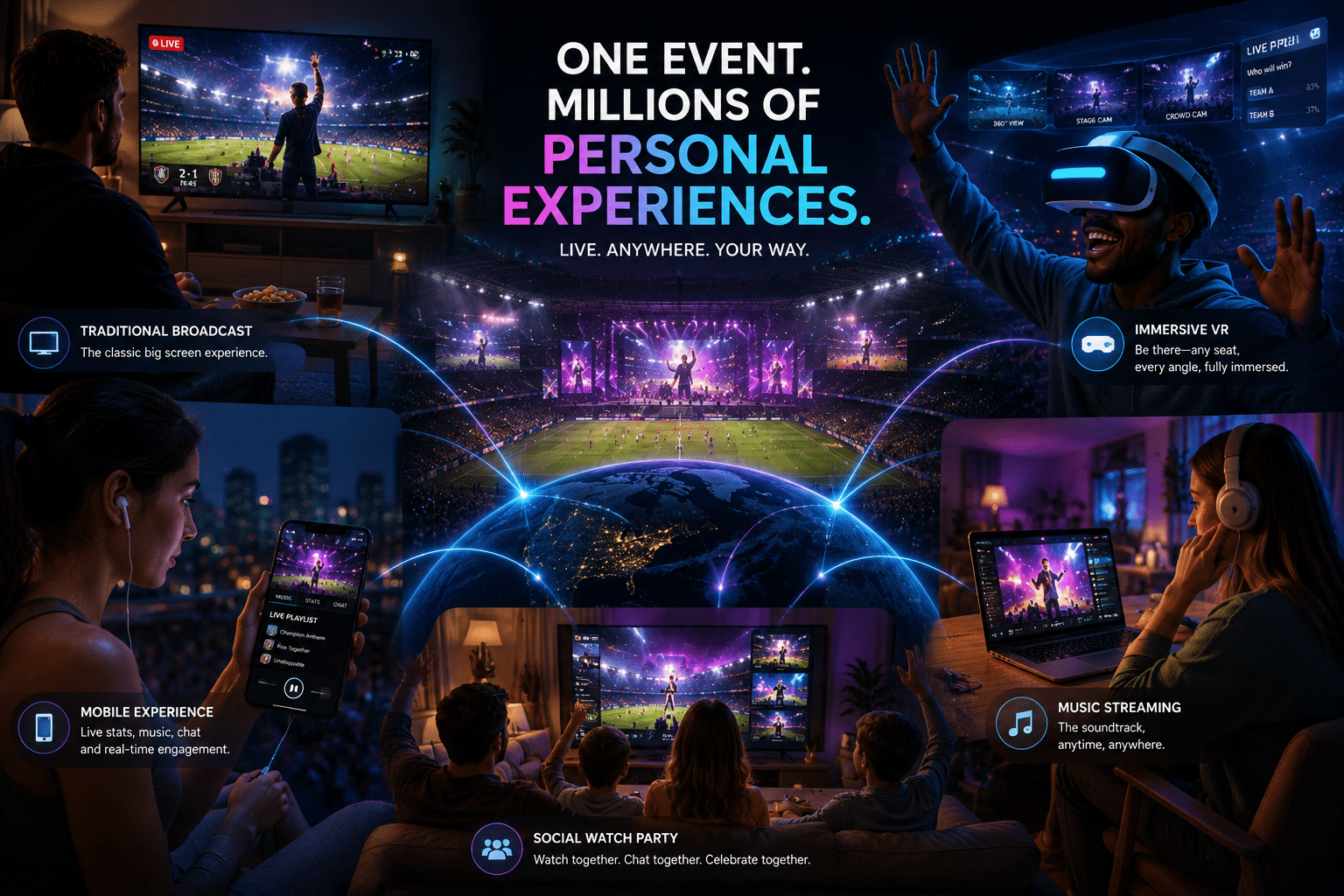
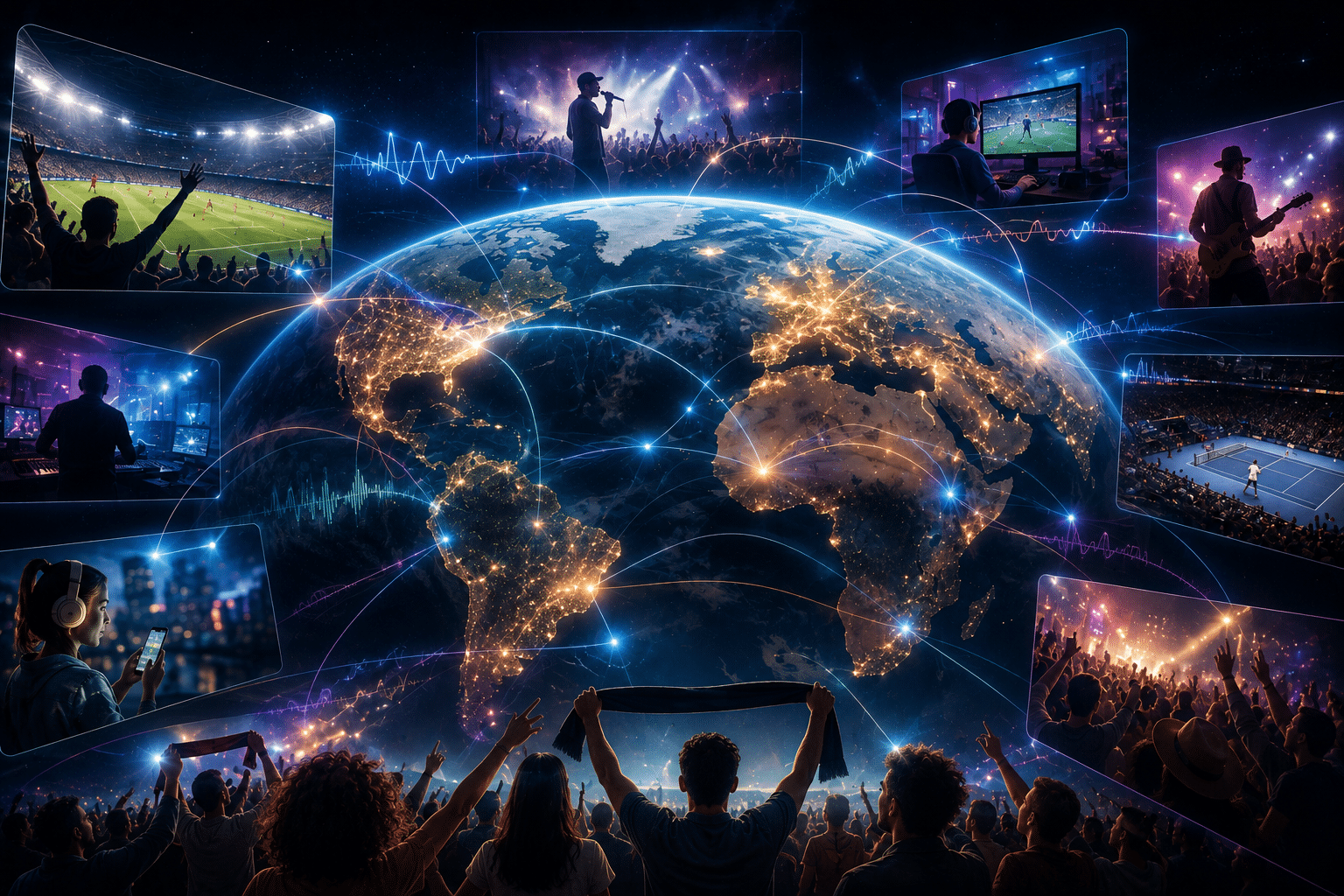
The next generation of sports entertainment will not be confined to one stadium, one television network, one official soundtrack, or even one version of an event. Fans will move between live matches, streaming services, mobile devices, social platforms, gaming environments, virtual concerts, interactive broadcasts, and personalized digital experiences.
Music will connect those environments.
The FIFA World Cup and the Olympic Games will remain athletic competitions at their core, but they will increasingly function as global entertainment ecosystems. A fan may watch the match on one screen, communicate with friends on another, stream the official soundtrack, participate in a virtual event, unlock digital content, and receive a personalized highlight package—all during the same evening.
Artificial intelligence will help organize and personalize those experiences. Streaming will distribute them instantly. Virtual platforms will make participation possible without physical travel. Interactive technology will allow audiences to influence what they see and hear.
The opportunity is enormous.
So is the responsibility.
As the boundaries between sports, music, gaming, broadcasting, and technology continue to disappear, the entertainment industry must still answer several fundamental questions:
Who created the music?
Who owns it?
Who authorized its use?
How should the creator be credited?
How should royalties be calculated?
How can technology expand access without diminishing authorship?
The future of sports and music will be global and interactive. It must also remain fair, transparent, and respectful of creative rights.
The Stadium Is Becoming a Global Platform
A stadium has a physical capacity.
A digital experience does not have the same limitation.
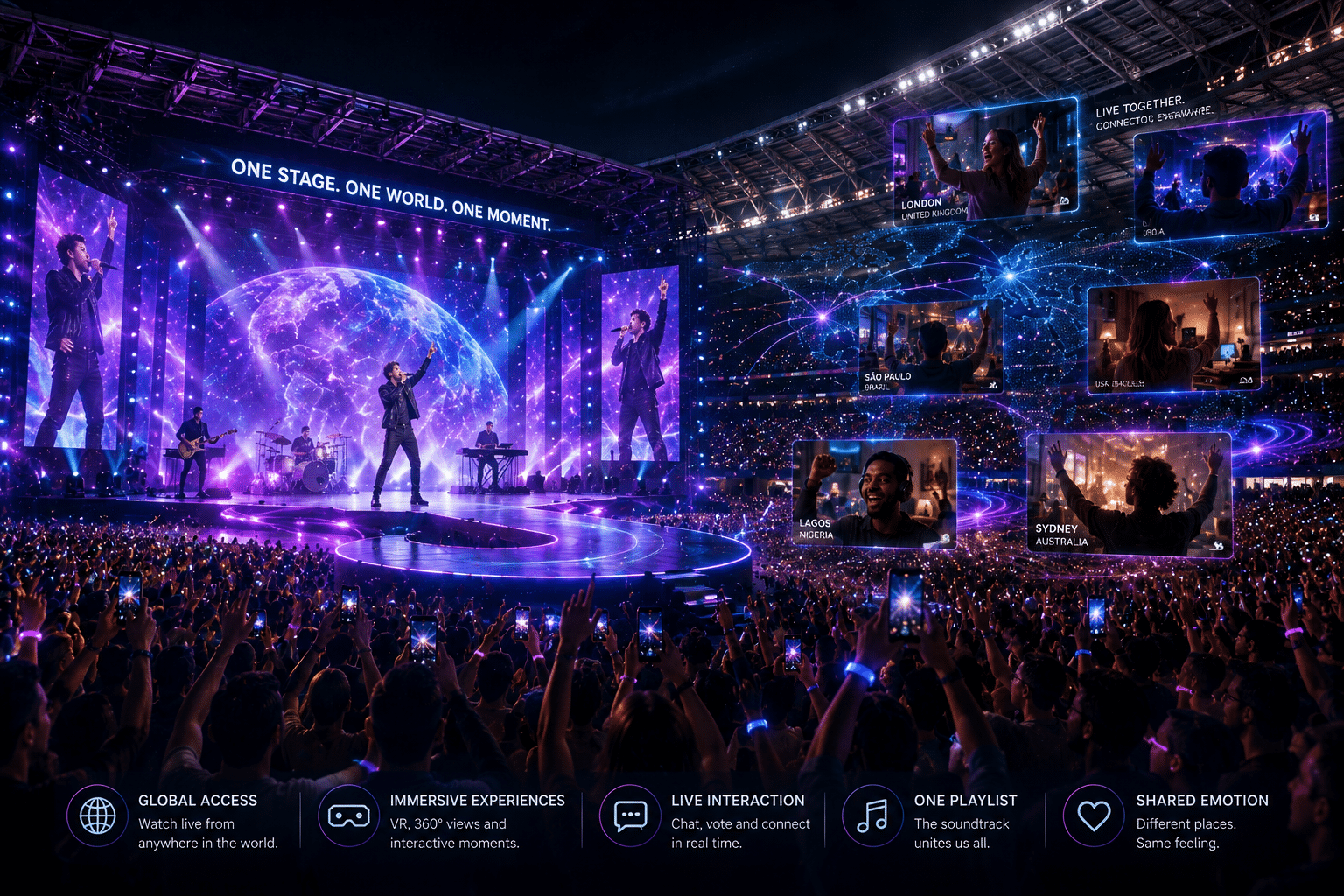
The largest sporting events have always reached audiences far beyond the people inside the venue, first through radio, then television, cable, satellite, and online broadcasting. What is different today is the number of ways fans can participate.
The audience is no longer simply receiving one official feed.
Fans can watch highlights, follow creators, join live conversations, select camera views, interact with sponsors, stream tournament music, enter fantasy competitions, purchase digital goods, and participate in virtual communities.
The International Olympic Committee has made digital engagement a strategic priority, using data and technology to better understand audiences and deliver more personalized experiences. Its digital initiatives increasingly connect fans before, during, and after the Games rather than limiting engagement to the period of live competition.
FIFA is moving in a similar direction. Its commercial plans for the FIFA World Cup 2026™ include connected technologies, interactive activations, immersive experiences, and other forms of digital fan engagement.
This suggests an important shift.
A sporting event is no longer a single product delivered at a fixed time. It is a network of connected experiences that can begin months before the competition and continue long after the trophy is presented.
Music is particularly well suited to that network because it can travel independently.
A match must be watched at a certain time to be experienced live. A song can be streamed before the tournament, performed during it, remixed afterward, used in a game, shared in a video, or rediscovered years later.
Music keeps the event emotionally active between the moments of competition.
The World Cup Is Becoming a Music and Media Ecosystem
The FIFA World Cup provides a clear example of this transformation.
Earlier tournaments were often represented by one principal official song. The modern strategy is much broader.
FIFA Sound describes its purpose as bringing together football and music through artist collaborations, official soundtracks, and major performances.
For Qatar 2022, FIFA moved toward a multi-song official soundtrack featuring artists from different regions and musical traditions. The project was designed to connect artists, players, and supporters through the shared languages of football and music.
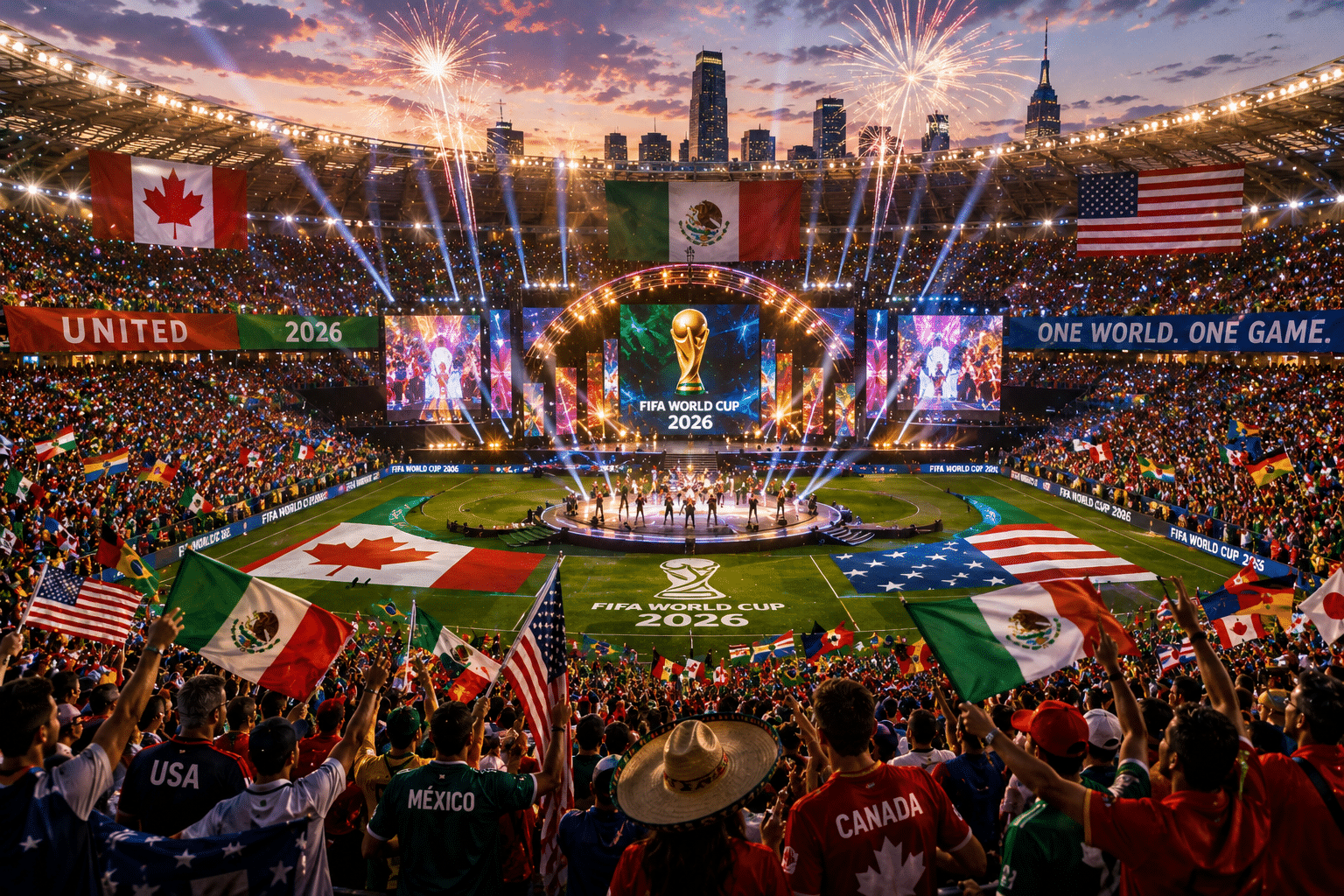
The FIFA World Cup 2026™ expanded that idea into a complete official album created around the cultures of Canada, Mexico, the United States, and the global game. FIFA presents the album as a collection of artists from across continents and genres rather than as one song expected to represent the entire tournament.
That album is not merely a promotional product.
It operates across streaming services, live ceremonies, social platforms, playlists, fan festivals, music videos, artist communities, and international media coverage.
During the 2026 tournament, FIFA reported that the official album had surpassed hundreds of millions of streams and that multiple tracks were appearing on global discovery charts.
The significance is larger than the streaming total.
The World Cup now generates a musical environment that can reach fans who may never attend a match and may not even consider themselves serious football followers.
A listener may discover a performer through the tournament album. An artist’s existing audience may begin following the World Cup. A fan may attend a public festival to hear music and remain to watch a match.
The event and the music strengthen each other.
The Olympics Will Become More Personalized
The Olympic Games present a different but equally important opportunity.
The Olympics include many sports, nations, venues, languages, time zones, and individual stories. No viewer can watch everything.
Artificial intelligence and advanced data systems can help organize that complexity.
A future Olympic fan may receive a personalized experience based on favorite countries, sports, athletes, languages, musical preferences, and viewing history.
One fan might receive:
- A morning recap featuring athletes from a preferred country
- A playlist inspired by the day’s host-city celebrations
- Notifications when a favorite event is beginning
- Automatically translated interviews
- Personalized highlight packages
- An interactive map of venues and cultural events
- Music recommendations connected to participating nations
- Virtual access to ceremonies or fan zones
Another fan could experience the same Olympic Games in a completely different way.
Personalization does not have to divide the audience. Done well, it can help more people find their way into an event that might otherwise feel too large to navigate.
The challenge will be maintaining shared moments.
Part of the power of the Olympic Games comes from knowing that people around the world are watching the same ceremony, race, final, or medal presentation. If every fan receives an entirely separate experience, some of that common identity could be lost.
The best systems will balance personal relevance with global participation.
They will help each fan find the stories that matter personally while preserving the moments everyone experiences together.
Music can assist with that balance.
A personalized playlist can reflect individual taste. An official anthem can still unite the entire audience.
Streaming Has Replaced the One-Soundtrack Model
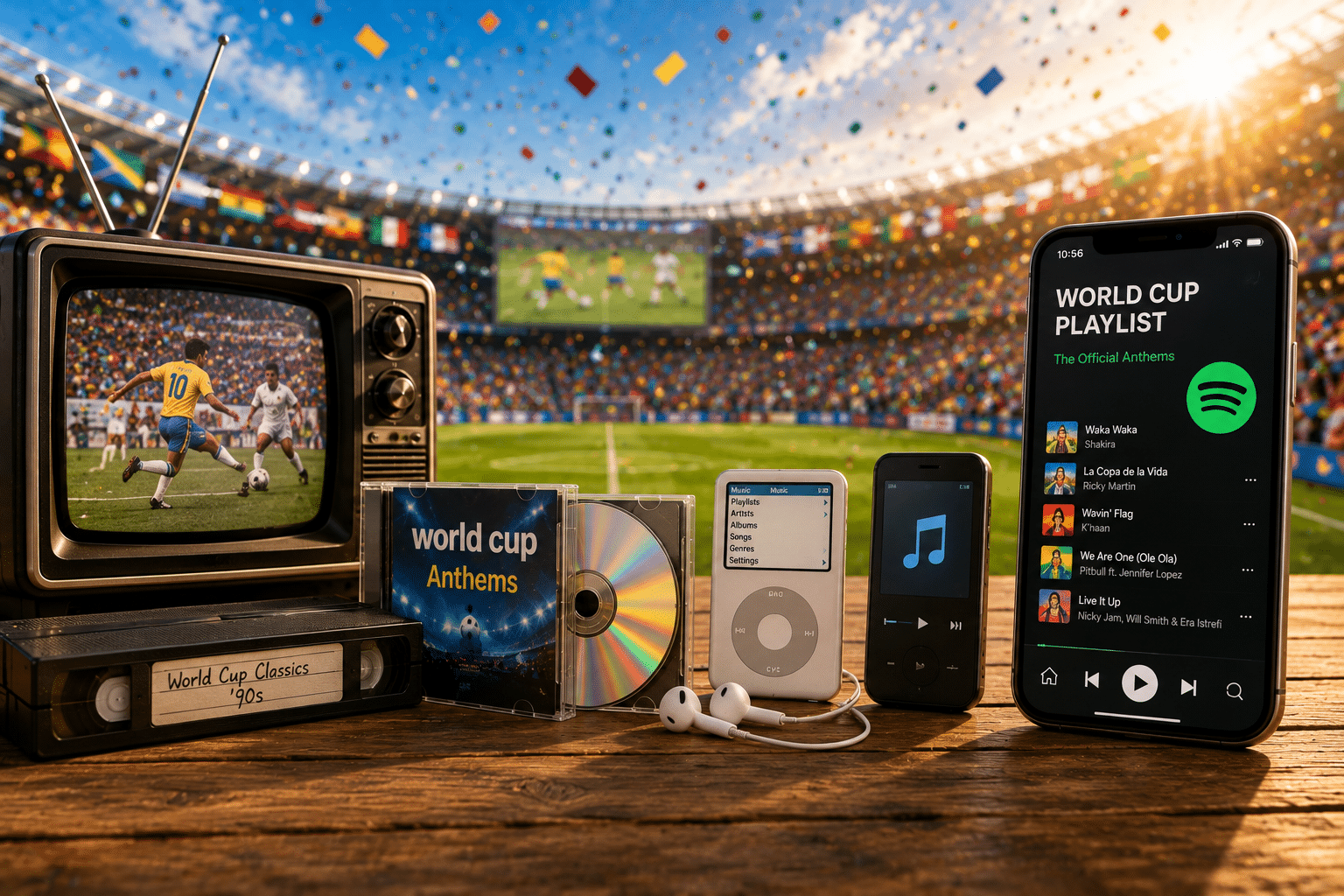
In the physical-record and broadcast eras, tournament music was relatively centralized.
A governing body, broadcaster, label, or sponsor selected a limited number of songs. Those songs were played repeatedly until the audience associated them with the event.
Streaming has changed that structure.
The official soundtrack still matters, but it now exists beside millions of fan-created playlists, national-team songs, viral recordings, regional hits, stadium chants, remixes, and older anthems rediscovered during the tournament.
The result is not one soundtrack.
It is a layered musical ecosystem.
A modern sporting event may have:
- An official album
- A ceremonial anthem
- A broadcast theme
- A sponsor soundtrack
- Host-city playlists
- Team-specific songs
- Player entrance music
- Supporter chants
- Social-media trends
- Virtual-world performances
- Fan-created compilations
- Algorithmically generated recommendations
This gives audiences more choice, but it also creates new challenges for rights administration.
A song used in a television broadcast may follow one licensing path. A song streamed through a music service may follow another. A recording included in a game may require separate agreements. A live virtual performance, interactive remix, or user-generated video may raise additional questions.
Music can now enter thousands of sporting contexts.
Publishers and rights holders must be prepared to understand those contexts.
Virtual Concerts Are Becoming Real Entertainment
The phrase “virtual concert” once suggested a substitute for live performance.
That is no longer the most useful way to think about it.
A virtual concert can do things that a physical stage cannot.
The performer may appear in several locations at once. The audience may move through changing environments. Visual scale may be unlimited. Fans may interact with the show, unlock content, influence elements of the experience, or participate through avatars.
Gaming platforms have already demonstrated this potential.
Epic Games has used Fortnite for concerts, artist events, and music-centered experiences. Its Soundwave Series was designed to introduce artists from different parts of the world to large audiences inside interactive digital spaces.
Fortnite Festival developed that connection further by allowing users to perform songs, select instruments, play with friends, and interact with a growing catalog of licensed music.
The important word is not “virtual.”
It is “participatory.”
A conventional concert asks the audience to watch and listen. An interactive music experience can ask the audience to move, play, choose, collect, create, or collaborate.
Sports organizations can use the same model.
Imagine a World Cup concert in which fans from dozens of countries enter a shared digital stadium, represent their teams through avatars, vote on songs, explore host-city environments, and participate in a performance connected to the live tournament.
Imagine an Olympic closing ceremony with both a physical audience and a virtual environment where fans can move among artistic installations inspired by participating nations.
These experiences would not replace the physical event.
They would extend it.
The Fan Will Become a Participant
The future of sports entertainment will be less passive.
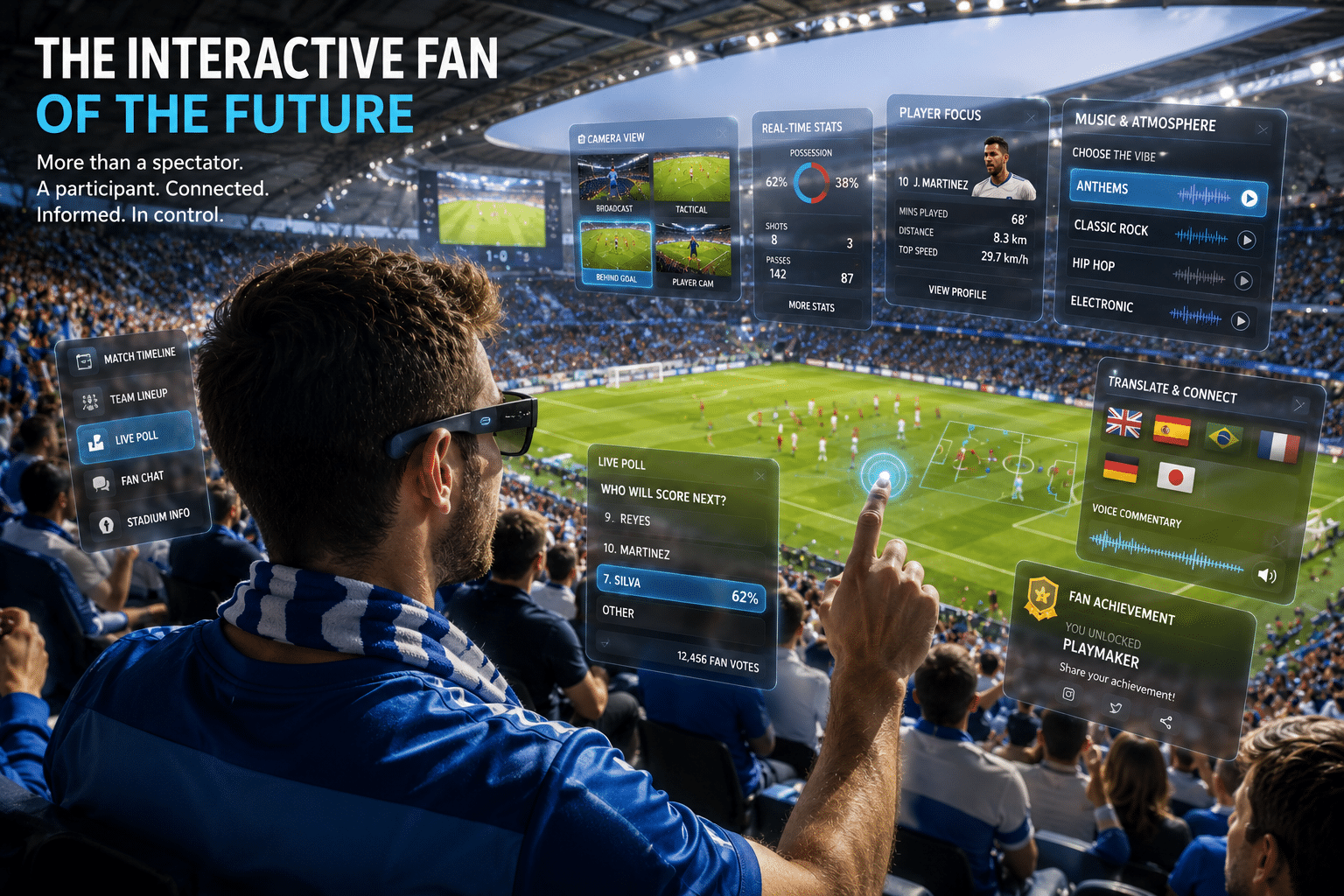
Fans will expect to do more than watch.
They may choose between camera angles, vote on music played during a digital fan event, create personalized highlight reels, participate in live polls, unlock athlete content, or interact with virtual representations of stadiums and ceremonies.
Music offers especially strong opportunities for participation.
Fans could:
- Build official tournament playlists
- Vote on songs for public celebrations
- Remix approved musical elements
- Choose entrance music in virtual competitions
- Participate in digital choirs
- Submit local versions of official themes
- Unlock stems, instrument parts, or alternate mixes
- Perform licensed songs inside gaming platforms
- Attend virtual artist appearances
- Purchase digital music-related collectibles
- Interact with artists during fan festivals
- Create legal user-generated content using pre-cleared music
This changes the audience’s relationship to the event.
The fan is no longer merely consuming an official product. The fan is helping shape the surrounding culture.
That creates loyalty and emotional investment.
It also requires thoughtful licensing.
An organization cannot invite millions of people to remix, reproduce, synchronize, or distribute music without considering the rights involved.
Participation must be designed into the license.
Artificial Intelligence Will Change Production
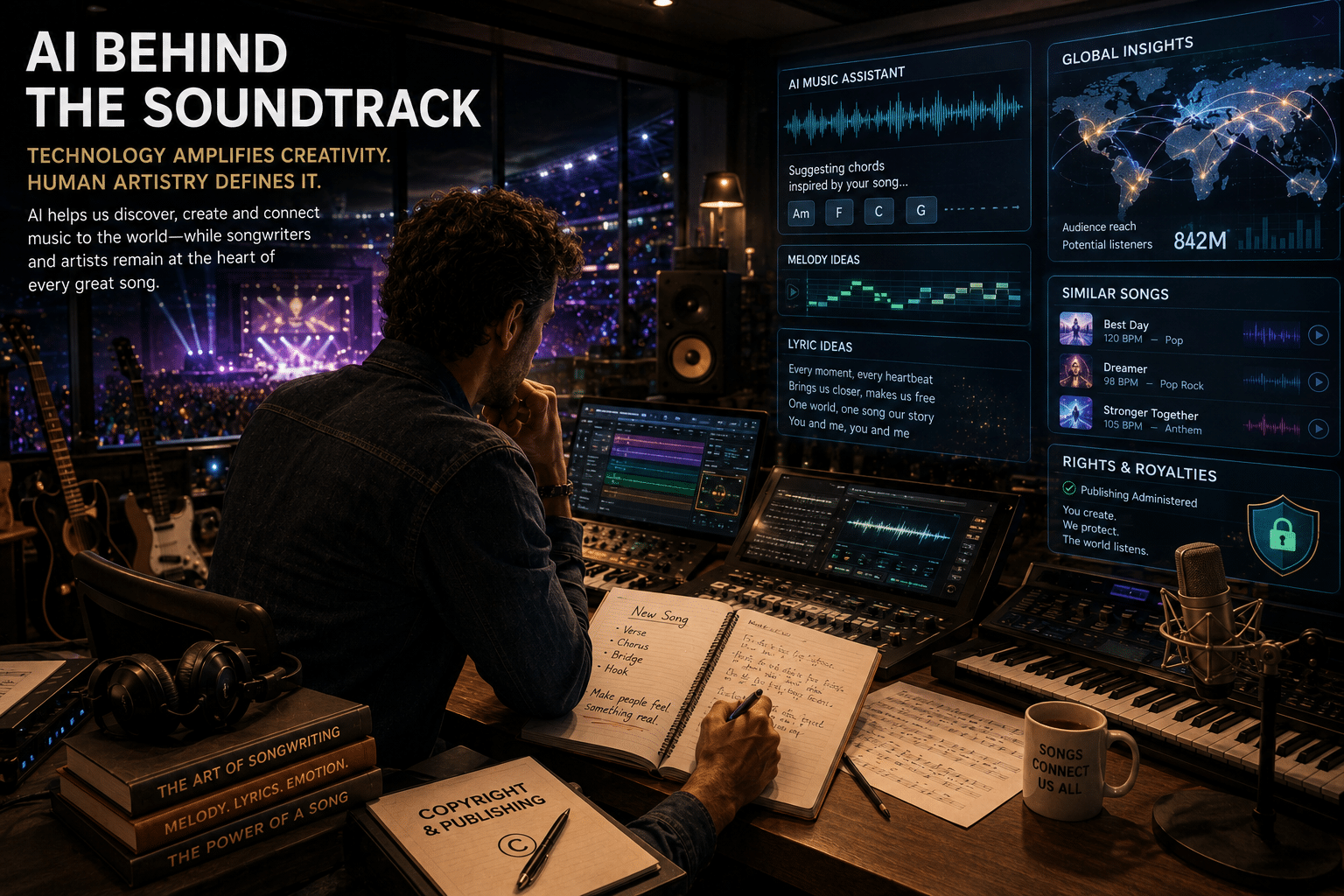
Artificial intelligence will influence nearly every part of the sports and music relationship.
Some uses will be practical and relatively uncontroversial.
AI can assist with:
- Searching large music catalogs
- Matching songs to emotional moods
- Organizing metadata
- Identifying possible royalty conflicts
- Translating subtitles and interviews
- Generating personalized recommendations
- Creating alternate lengths of approved content
- Improving audio accessibility
- Detecting unauthorized uses
- Producing real-time highlight indexes
- Helping fans locate performances and songs
These applications can reduce administrative friction and help legitimate music reach the appropriate audience.
More difficult questions arise when AI is used creatively.
Can a system create a new tournament song in the style of a known artist?
Can it reproduce a singer’s voice?
Can it generate an artificial performance by a deceased musician?
Can it create thousands of personalized versions of one anthem?
Who owns a work assembled partly or entirely through generative technology?
Was copyrighted music used to train the system?
Did the creators authorize that use?
The United States Copyright Office has been studying these questions through a multi-part review addressing digital replicas, the copyrightability of AI-generated material, and the use of copyrighted works in generative-AI training.
These are not theoretical concerns.
Sports and entertainment organizations operate at enormous scale. A digitally replicated voice, unauthorized style imitation, or AI-generated performance connected to a major tournament could reach millions of people almost instantly.
The technology will move quickly.
The principles should remain clear.
Human creators must be identified. Permission must be meaningful. Compensation must be fair. Audiences should know when they are encountering an artificial performance.
Innovation should expand creativity, not erase the creator.
AI Could Personalize the Soundtrack
One of the most promising applications of artificial intelligence is adaptive music.
A future sports platform might assemble different musical experiences for different fans without changing the event itself.
A viewer in Mexico could receive a soundtrack emphasizing Mexican artists. A viewer in South Korea might hear songs connected to Korean performers. A younger fan might receive contemporary pop and hip-hop, while another viewer could select orchestral or traditional music.
A personalized highlight reel might adjust the musical mood depending on whether the fan’s team won or lost.
A fitness platform connected to the Olympics could generate training playlists based on the pace of an athlete’s workout.
A virtual venue could adapt music dynamically as users move between spaces.
This would create valuable opportunities for catalogs containing many genres, tempos, languages, and emotional moods.
It would also make metadata more important than ever.
A system cannot license or recommend music responsibly if it does not know:
- Who wrote the composition
- Who owns the publishing rights
- Who controls the master
- Which territories are available
- Which uses are permitted
- What restrictions apply
- How royalties should be allocated
- Whether an AI-created adaptation is authorized
The future may appear automated.
Behind it must stand accurate human documentation.
Digital Replicas Will Require New Rules
Virtual entertainment creates the possibility of performances that outlive the performer.
An artist’s voice, likeness, movements, and stage identity could be recreated digitally. A deceased singer might appear in a virtual ceremony. A current artist could perform in many digital locations at once.
These uses may be artistically meaningful when authorized and handled with care.
They can also become exploitative.
The U.S. Copyright Office has specifically examined digital replicas and recommended stronger legal protection against unauthorized imitations of an individual’s voice or appearance.
Sports organizations, record companies, publishers, artist estates, unions, and technology platforms will need clear standards.
A digital performance should answer several questions:
Was the artist or estate consulted?
Was consent specific to this use?
How long may the replica be used?
Can the performance be altered later?
Who approves the final presentation?
How will audiences be informed?
Who receives the income?
Can the digital identity be transferred to another company?
These are questions of dignity as well as commerce.
A performer is not merely a collection of data points available for unlimited reuse.
Music Publishers Will Become Technology Stewards
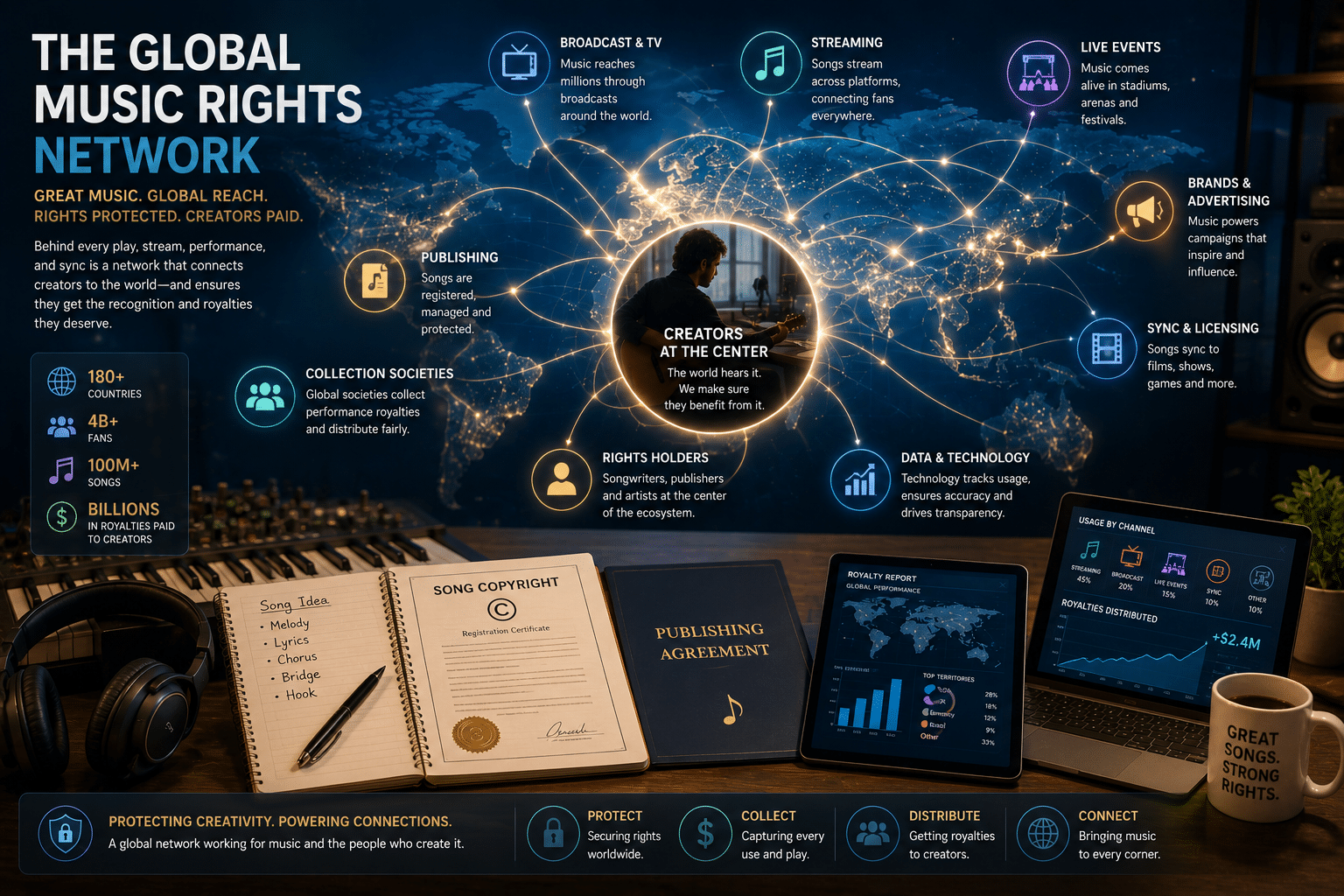
The future publisher will still perform the traditional functions of copyright registration, administration, licensing, royalty collection, and catalog preservation.
But the scope of those responsibilities will expand.
Publishers may need to manage rights involving:
- Interactive games
- Virtual concerts
- Digital replicas
- AI-generated adaptations
- Personalized audio experiences
- Immersive environments
- Multilingual versions
- User-generated content programs
- Real-time remixes
- Virtual merchandise
- Blockchain-based ownership records
- Global microlicensing
- New forms of public performance
- Data used to train creative systems
This does not mean every publisher must become a software company.
It does mean that publishers must understand how technology changes the use of a song.
A composition that once required a handful of licenses might now appear in thousands of personalized versions, virtual spaces, short videos, interactive products, and user-created experiences.
The fundamental work remains the same:
Identify the creator.
Document the ownership.
Define the permitted use.
Collect the compensation.
Preserve the catalog.
The methods will change.
The responsibility will not.
Global Entertainment Requires Global Rights Administration
The phrase “without borders” sounds liberating.
Legally, however, music rights remain territorial.
A publisher may control a composition in one country but not another. A performing-rights organization may administer certain rights within a specific territory. A platform may have permission to offer a recording in some markets but not others.
Virtual events complicate these boundaries.
Where does an online concert occur?
Is it performed in the country where the server is located, where the artist appears, where the platform is headquartered, or everywhere a fan watches?
Which royalty rules apply to a personalized stream delivered across dozens of countries?
What happens when fans create derivative content and redistribute it globally?
The industry will need more efficient licensing systems, improved international data exchange, and stronger cooperation among publishers, societies, labels, platforms, and technology providers.
Global access cannot depend on administrative confusion.
The easier it becomes to distribute music worldwide, the more important it becomes to identify worldwide ownership accurately.
Live Events Will Become More Valuable, Not Less
The growth of virtual entertainment does not mean physical stadiums will become irrelevant.
The opposite may occur.
As digital experiences become more common, the value of genuine physical presence may increase.
Standing inside a stadium when thousands of people sing the same song cannot be reproduced completely through a screen. The pressure of the sound, movement of the crowd, shared anticipation, and awareness that the moment is happening only once give live events their power.
Digital technology can make those moments more accessible and extend their life.
It can allow fans who cannot travel to participate remotely. It can offer additional viewpoints and information. It can preserve performances for later discovery. It can connect the stadium to public fan zones and virtual communities around the world.
The strongest future events will not force a choice between physical and digital.
They will combine them.
The live stadium will remain the emotional center.
The digital network will carry that emotion outward.
The Human Experience Must Remain at the Center
Technology can create spectacle.
It cannot guarantee meaning.
A virtual concert may be visually extraordinary but emotionally empty. An AI-generated song may be technically polished but lacking in personal experience. A personalized broadcast may be convenient but isolating.
The purpose of sports and music is not simply to deliver more content.
It is to connect people.
The best uses of technology will deepen that connection.
They will help a child in one country discover an athlete from another. They will allow a supporter who cannot afford international travel to enter a shared celebration. They will introduce local artists to global audiences. They will help preserve historic songs and performances. They will allow creators to participate economically when their work generates new forms of value.
The worst uses will treat artists, fans, and cultures as data to be extracted.
The difference will depend on the choices made now.
A Global Stage With Room for Local Voices
As sports entertainment becomes more international, there is a danger that global culture could become less distinctive.
The same artists, sponsors, platforms, and production styles could dominate every event.
Music should prevent that from happening.
Every host city and nation contains musical traditions that deserve to be heard. The World Cup and Olympic Games should create room for local performers, regional genres, indigenous traditions, independent writers, community choirs, and emerging artists.
Global entertainment should not mean one culture broadcast everywhere.
It should mean many cultures receiving access to the same stage.
The 2026 World Cup’s multi-country structure demonstrates the possibilities. Its official music program brings together different languages, generations, genres, and geographic identities rather than asking one artist to represent the entire world.
The future should extend that principle.
Technology can make the stage larger without making the music less local.
The Next Great Sports Anthem May Be Interactive
The most famous sports anthems were created as finished recordings.
The next generation may be designed to evolve.
A future World Cup anthem could have an official central composition with authorized versions created for different countries. Fans could unlock instrumental layers, participate in digital choirs, or contribute approved vocal elements.
An Olympic theme might change subtly as the torch travels between locations.
A virtual concert could allow audiences in different regions to influence the sequence of songs.
A championship celebration could combine live crowd audio from several cities into one global performance.
These ideas would create difficult production and licensing challenges.
They would also create something powerful: music that does not merely accompany the audience but includes it.
The crowd has always completed the greatest stadium songs.
Technology may finally make that participation visible around the world.
The Future Must Reward the People Who Create It
The commercial future of sports and music will generate new revenue from subscriptions, sponsorships, digital goods, virtual events, personalized content, interactive experiences, and global licensing.
Creators must participate in that value.
Songwriters should not discover that their work powered an immersive global event without receiving meaningful compensation.
Performers should not see their voices or likenesses replicated without authorization.
Publishers should not be asked to accept vague rights grants covering technologies that did not exist when an agreement was signed.
Fans should not be misled about whether a performance is live, recorded, synthetic, or digitally reconstructed.
The future can be both innovative and fair.
That requires transparency, consent, documentation, and respect for intellectual property.
These are not barriers to progress.
They are the conditions that make sustainable progress possible.
Entertainment Without Borders—But Not Without Creators
The future of sports and music will be larger than any stadium.
A World Cup song may begin in a studio, premiere during a live ceremony, spread through streaming platforms, enter a virtual world, become part of an interactive game, appear in personalized highlights, and remain active in fan communities long after the tournament ends.
An Olympic performance may be experienced physically by thousands and digitally by millions, with different audiences receiving different layers of the same event.
Artificial intelligence will help organize, translate, personalize, and perhaps create parts of those experiences.
Virtual platforms will bring artists and fans together in environments that have no physical equivalent.
Interactive technology will allow audiences to become participants.
But underneath every new platform will remain something very old and very human.
A person writes a melody.
A performer gives it a voice.
A crowd hears it and feels something together.
Technology can expand the reach of that moment.
It should never make us forget where the moment began.
The future of sports and music will be entertainment without borders.
It must not become entertainment without authorship, ownership, responsibility, or memory.
The world may become the stadium.
The human creator must remain at the center of the song.
Looking Toward the Next Era
Champion Music Publishers supports innovation that expands opportunities for songwriters, composers, performers, publishers, sports organizations, and audiences while preserving the rights and dignity of the people whose creativity makes those experiences possible.
The next era of sports and music will be built through collaboration among artists, publishers, leagues, governing bodies, broadcasters, streaming services, game developers, technology companies, and fans.
Done properly, it can create something extraordinary:
A global stage large enough for everyone to participate, yet personal enough for every fan to feel that the music is speaking directly to them.
With musical best wishes,
John Francis Krimsky
Founding President
Champion Music Publishers
This article is intended for general educational and commentary purposes and does not constitute legal advice.