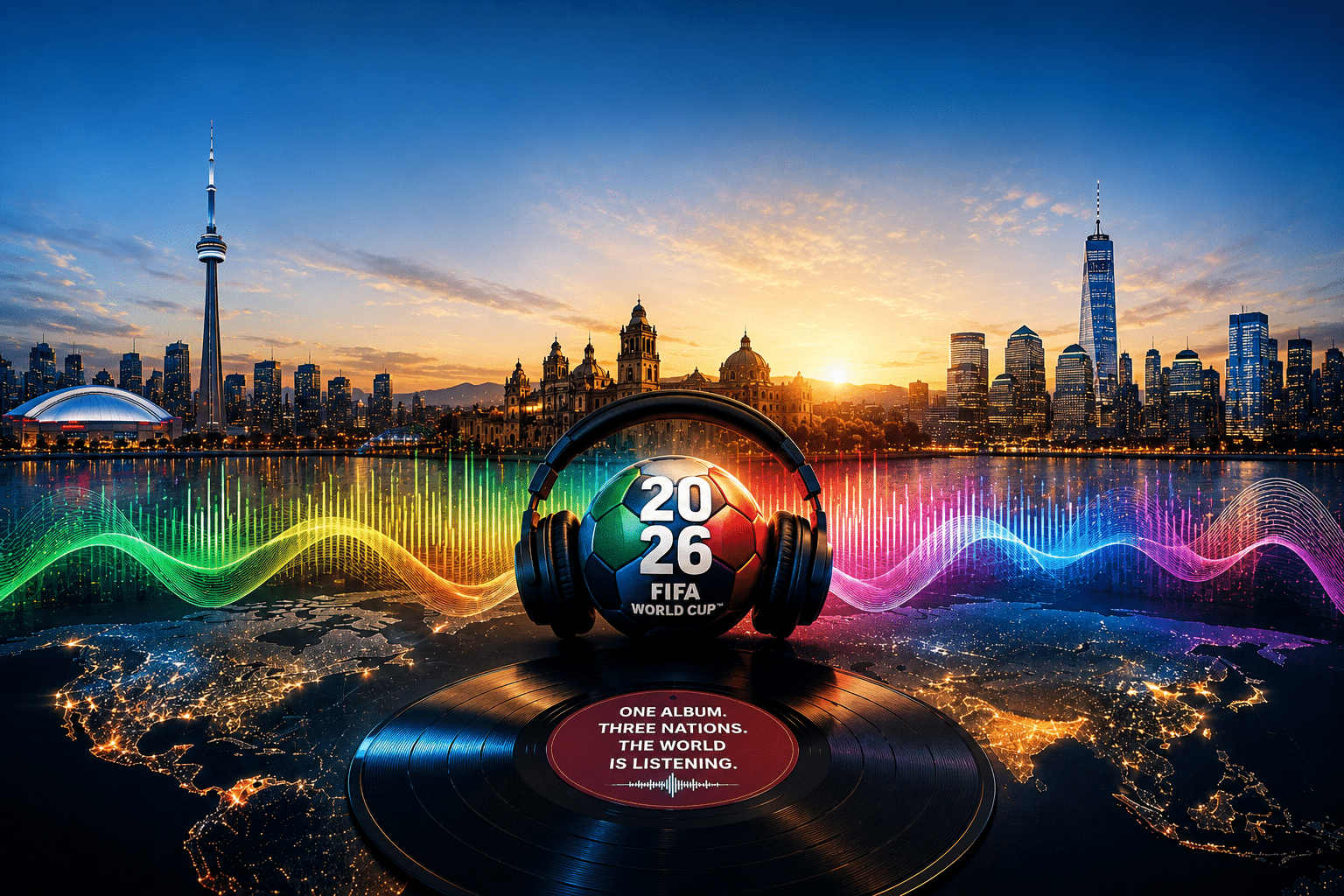
The Global Impact of the FIFA World Cup 2026™ Music Album
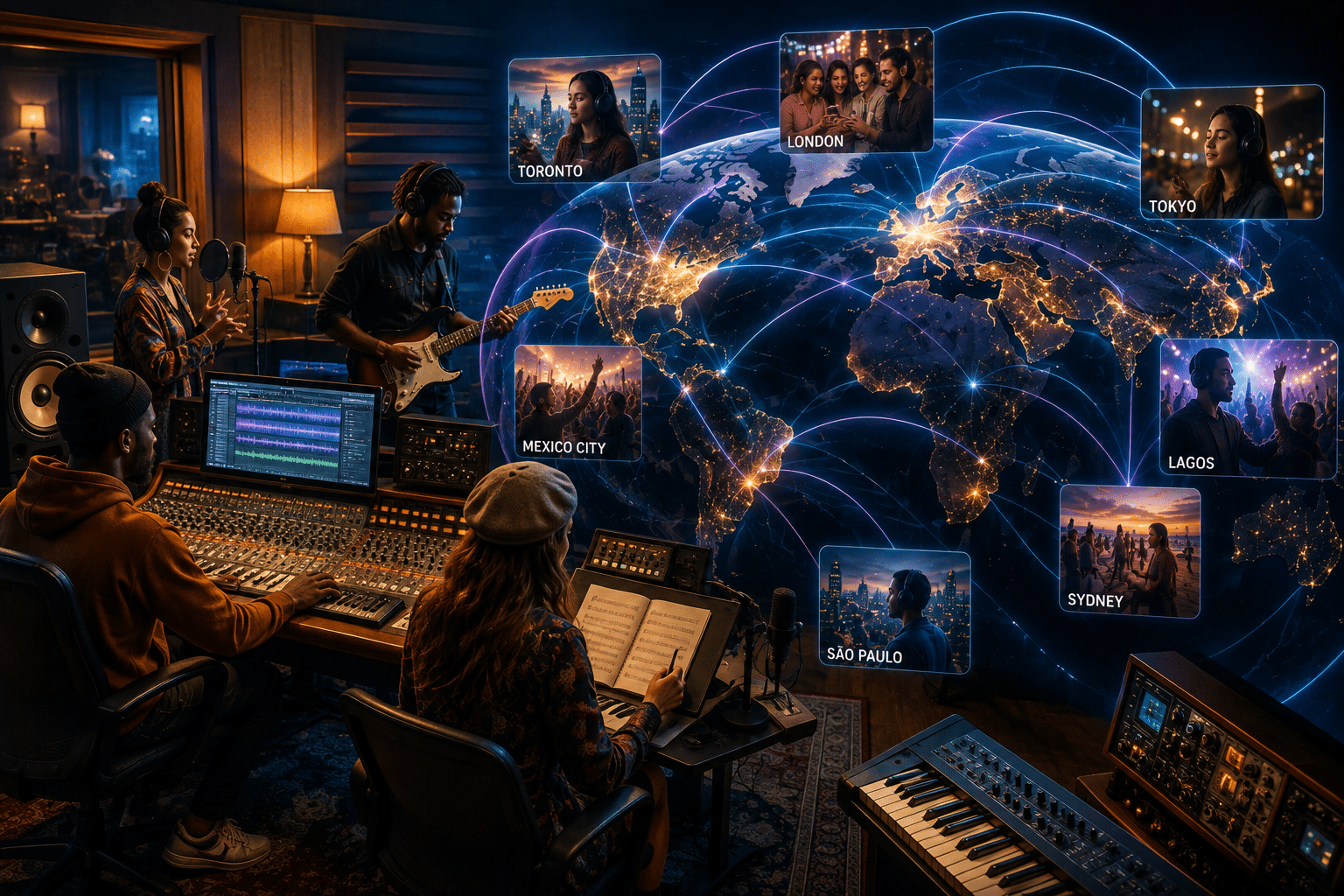
How Music Carries the World Cup Beyond the Stadium and Into Global Culture
By John Francis Krimsky
Founding President, Champion Music Publishers
A football match is played in one place at one time.
Music can travel everywhere.
That distinction helps explain why the Official FIFA World Cup 2026™ Music Album is more than a collection of songs released alongside an international sporting event. It is part of a much larger cultural experience—one designed to connect artists, songwriters, football supporters, casual listeners, host nations, and worldwide audiences across languages, borders, and media platforms.
The FIFA World Cup has always extended beyond the field of play. It is a sporting competition, but it is also a global gathering shaped by national identity, television, fashion, advertising, tourism, public celebration, and popular culture.
Music brings those parts together.
A match may last approximately two hours. A song can build anticipation weeks before the tournament begins, accompany supporters throughout the competition, and remain attached to their memories for decades afterward.
The Official FIFA World Cup 2026™ Music Album recognizes that the modern World Cup does not have only one audience or one sound. It brings together international artists, multiple genres, different languages, and musical traditions connected to the host nations of Canada, Mexico, and the United States—as well as the wider world participating in the tournament.
The result is not simply a soundtrack.
It is a cultural platform.
The World Cup Has Become a Global Entertainment Ecosystem
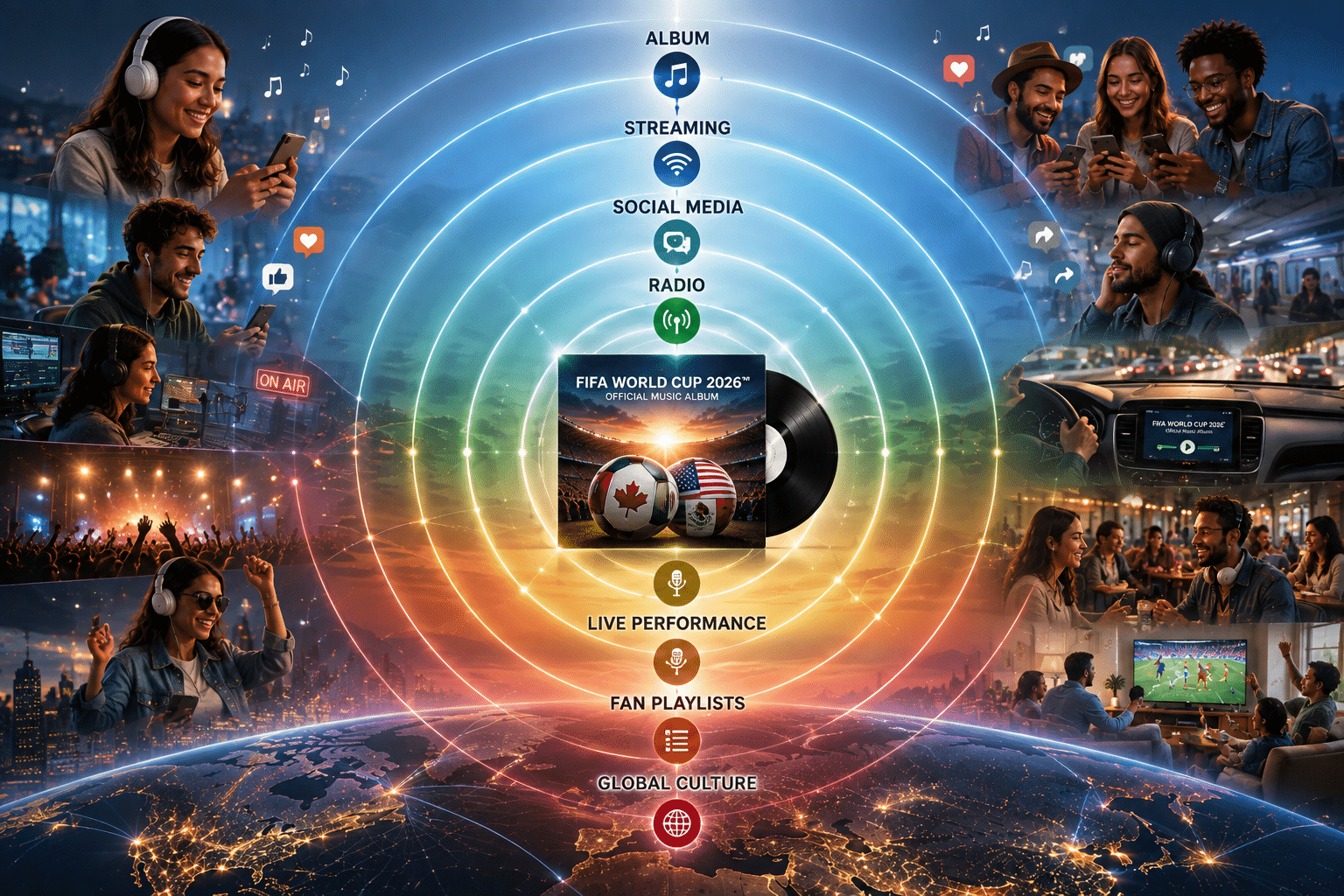
In earlier decades, most supporters experienced the World Cup through a limited number of channels.
They attended matches, listened on the radio, watched television coverage, or followed reports in newspapers. Tournament music reached audiences mainly through official ceremonies, broadcast themes, physical recordings, and radio play.
The modern World Cup operates very differently.
Supporters now encounter the tournament through:
- Live broadcasts and streaming services
- Social-media platforms
- Short-form video
- Official playlists
- Artist channels
- Music videos
- Fan festivals
- Gaming environments
- Podcasts and digital commentary
- Sponsor campaigns
- Stadium programming
- User-created content
- Public celebrations
- On-demand highlights
Music can move through all of these channels.
That gives the official album a reach extending far beyond the venues in which the matches are played. A listener does not need a ticket, a television package, or even a deep knowledge of football to encounter the music.
A fan may discover an artist through a World Cup playlist.
An artist’s existing audience may become interested in the tournament.
A song may circulate through social media before the listener knows that it is part of the official album.
The connection can work in either direction.
Football brings audiences to music.
Music brings new audiences to football.
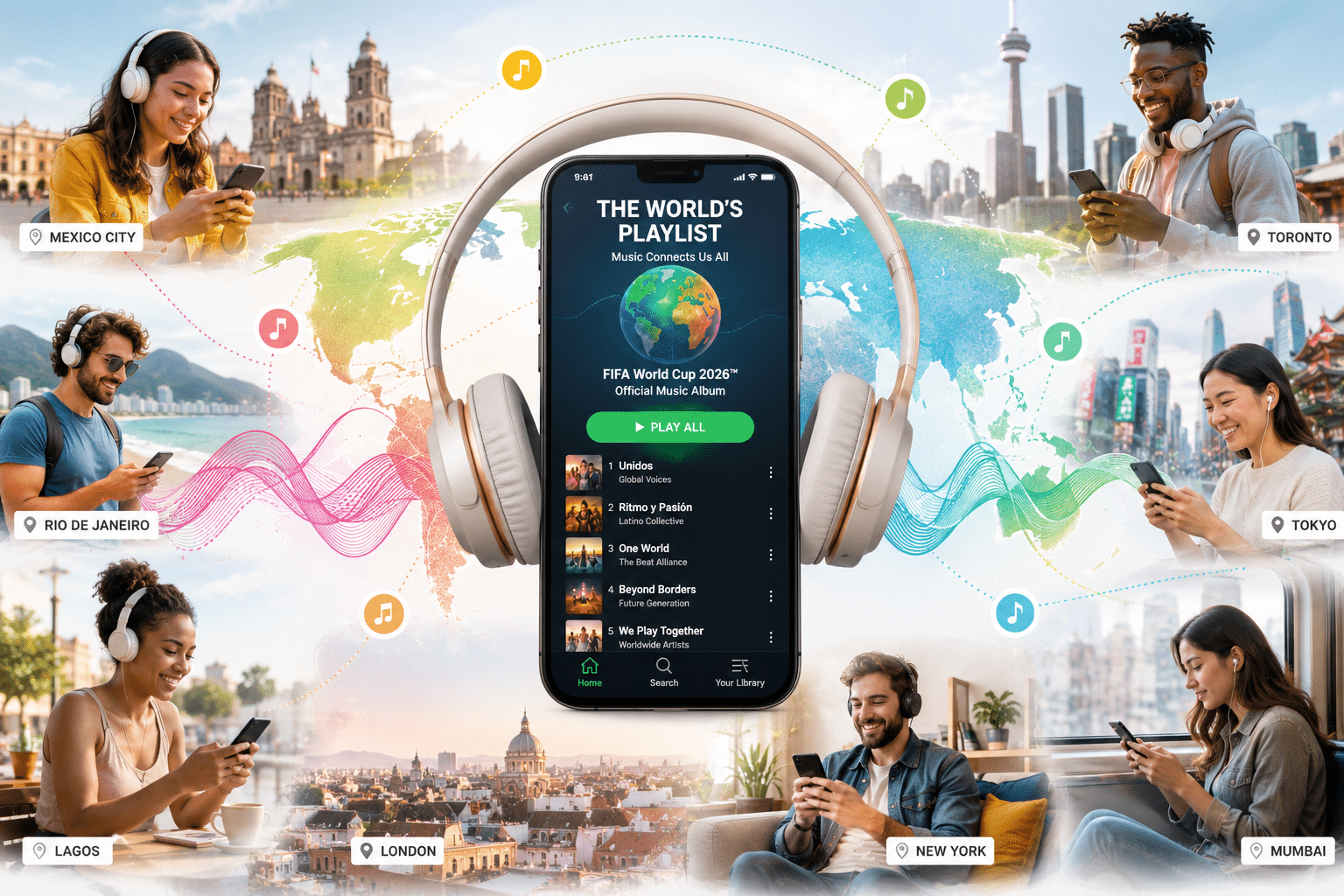
Why an Album Makes Sense for the 2026 World Cup
For many years, tournament music centered primarily on one official song.
That model produced enduring recordings such as Ricky Martin’s “La Copa de la Vida” and Shakira’s “Waka Waka.” A single anthem could give a tournament a clear musical identity and become closely connected to its most memorable moments.
The FIFA World Cup 2026™, however, is too large and diverse to be represented fully by one song.
The tournament spans three host countries, numerous cities, a greatly expanded field of national teams, and audiences representing almost every musical culture imaginable.
One performer, genre, language, or production style could never reflect the full scale of that experience.
An album provides more room.
It allows different recordings to serve different emotional and cultural purposes. One track may create the feeling of a stadium celebration. Another may emphasize national pride. A collaboration may introduce audiences from one market to an artist from another. A reflective song may accompany tournament memories, while a high-energy release may become part of fan festivals and public celebrations.
The album format allows the World Cup to have several musical identities without losing its overall unity.
Instead of asking one song to speak for everyone, the project invites many voices into the same conversation.
International Collaboration as Cultural Exchange
The most significant feature of a global World Cup music project is not simply the fame of the artists involved.
It is the connection between them.
International collaborations allow performers, songwriters, producers, publishers, and audiences from different musical traditions to meet through one project.
The Official FIFA World Cup 2026™ Music Album includes collaborations that cross national, linguistic, cultural, and genre boundaries. Artists associated with Latin music, African music, hip-hop, pop, electronic production, country, Caribbean sounds, and other traditions appear within the same larger program.
Those combinations reflect the reality of modern popular music.
Genres no longer develop in isolation. Artists collaborate across continents, and audiences move easily between musical traditions through streaming platforms. A listener may follow Latin pop, Afrobeats, hip-hop, electronic dance music, and international football without viewing any of them as separate worlds.
A World Cup album gives that borderless listening culture a visible form.
The collaborations also have symbolic importance.
Football matches are built around national competition. Music offers a parallel space for cooperation.
Two countries may oppose each other on the field while artists connected to those cultures create something together in the studio.
The tournament celebrates rivalry.
The music demonstrates collaboration.
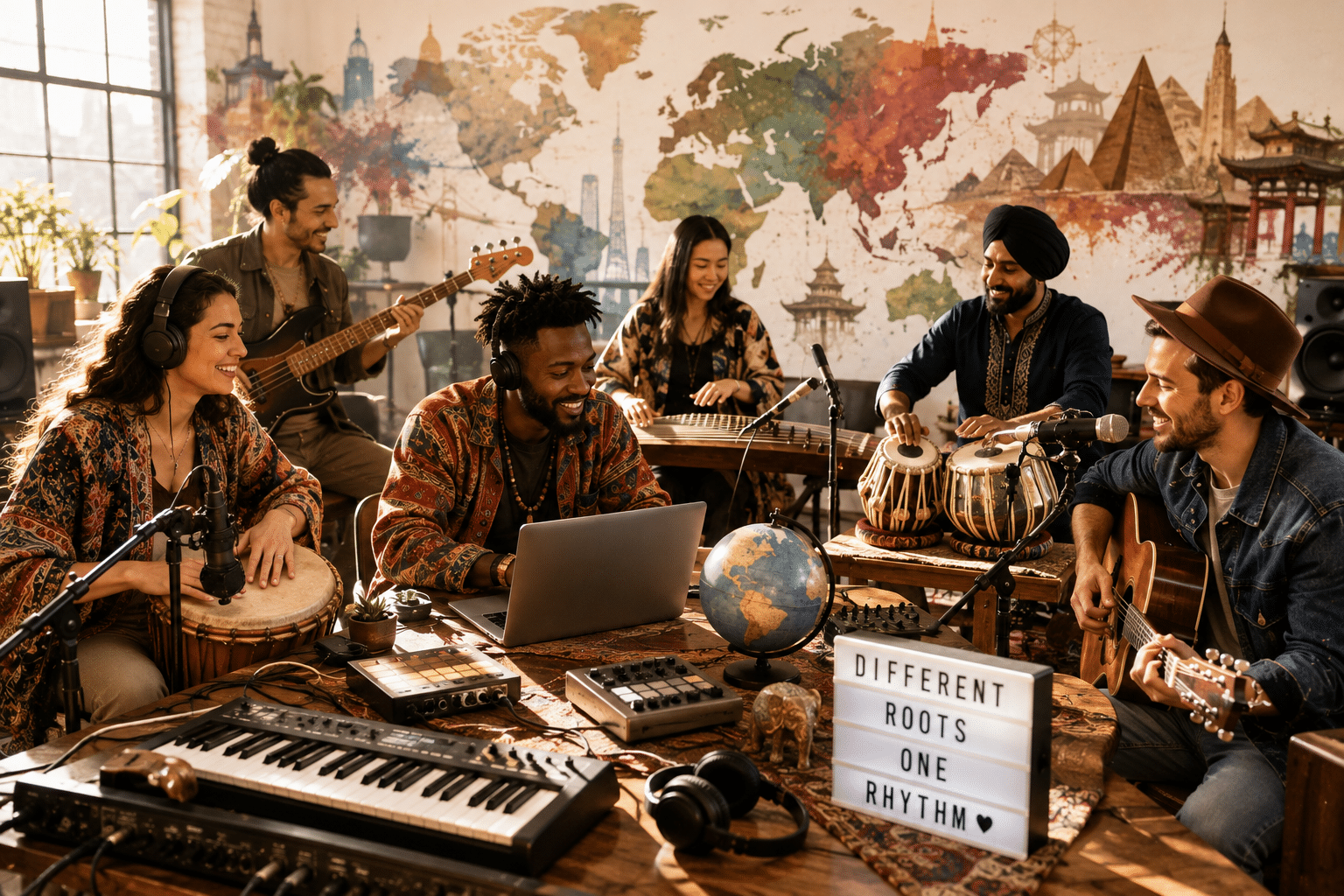
The Host Nations Bring Different Musical Identities
Canada, Mexico, and the United States each bring enormous musical influence to the 2026 World Cup.
Mexico contributes a rich heritage including regional Mexican music, mariachi, norteño, banda, cumbia, Latin pop, rock, and contemporary urban music. Its musical culture is deeply connected to public celebration, dance, family, identity, and national pride.
The United States has shaped blues, jazz, country, rock and roll, soul, R&B, hip-hop, house, gospel, and many other traditions that now influence popular music around the world.
Canada brings its own diverse musical landscape, including internationally successful pop, rock, folk, electronic, hip-hop, R&B, francophone, indigenous, and multicultural traditions.
An album connected to all three nations has an extraordinary range of sounds from which to draw.
But the World Cup is larger than its hosts.
The participating teams and their supporters bring music from Africa, Asia, Europe, South America, the Caribbean, the Middle East, and the Pacific. Every national team arrives with its own chants, anthems, rhythms, celebrations, and popular songs.
The official album cannot contain every one of those traditions.
It can, however, express the principle that no single musical culture owns the tournament.
The World Cup belongs to the world.
Its music should sound like an invitation to the world.
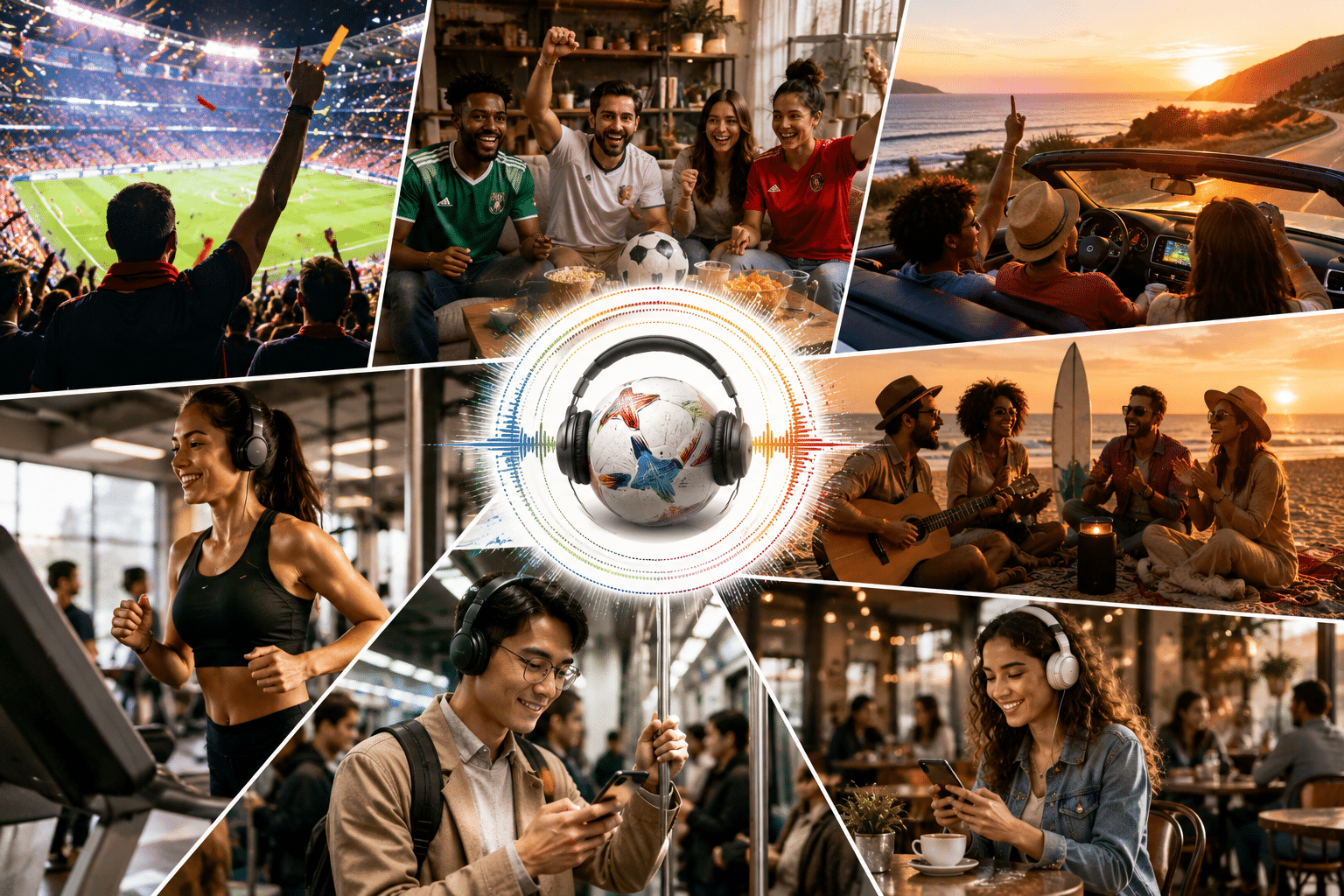
Streaming Turns the Album Into a Continuous Global Event
The physical-album era required audiences to purchase a record, cassette, or compact disc. Distribution depended on manufacturing, shipping, retail availability, radio support, and local media exposure.
Streaming removes many of those barriers.
A track can be released globally and become available to listeners in many countries almost immediately. Supporters can add songs to playlists, share them, replay them, discover related artists, or watch the corresponding videos without purchasing a physical product.
This changes the timing of a World Cup music campaign.
The album does not need to appear as one fixed release immediately before the first match. Songs can be introduced gradually, allowing the music program to build anticipation over time.
One collaboration can create attention in Latin music markets.
Another may reach hip-hop audiences.
A separate release can connect with African, Caribbean, European, Asian, country, electronic, or pop listeners.
The album becomes an evolving story.
Each single is another point of entry into the tournament.
Streaming also gives the music a longer life. When the final match ends, the album does not disappear from a television schedule or store shelf. It remains searchable, playable, and shareable.
A new supporter can discover it years later.
That long digital life allows World Cup music to continue generating cultural and commercial value long after the competition itself has ended.
The Playlist Has Become Part of the Fan Experience
In the streaming era, people do not only listen to albums in the sequence selected by the artist or producer.
They build playlists.
Supporters combine official songs with national anthems, older World Cup classics, team chants, regional music, favorite performers, and tracks connected to their own memories.
A fan in Mexico may build a playlist emphasizing Mexican artists and Latin football songs.
A supporter in England may combine official releases with familiar terrace chants.
A listener in Nigeria, South Korea, Brazil, Canada, Morocco, or Argentina may experience the same album from a completely different cultural perspective.
The official album provides the foundation.
The audience personalizes it.
This does not weaken the album’s identity. It expands it.
The same collection can become thousands of different soundtracks, shaped by the countries, teams, artists, and memories that matter to individual listeners.
The tournament is shared globally.
The musical experience becomes personal.
Music Reaches People Who Do Not Follow Football
One of the greatest strategic values of the album is its ability to reach beyond the established football audience.
Not everyone listens to sports commentary.
Not everyone follows qualifying matches or tournament standings.
But millions of people follow artists, streaming playlists, music videos, social-media trends, and entertainment news.
A major artist’s participation can bring an entirely new audience into contact with the World Cup.
Some listeners will arrive because they are fans of the performer rather than fans of football. They may watch a tournament performance, encounter a highlight video, follow another artist on the album, or become interested in the cultural story surrounding the event.
This broadens the World Cup’s appeal.
The tournament becomes part of a larger global entertainment conversation instead of remaining confined to sports coverage.
That crossover also benefits artists.
A performer may reach countries and demographics that were not previously central to his or her audience. A collaboration may introduce one artist to the fan base of another. A song may receive exposure through stadiums, broadcasts, social campaigns, fan festivals, and playlists simultaneously.
The World Cup creates reach that few entertainment platforms can match.
Music converts that reach into cultural engagement.
Social Media Gives Every Song Multiple Lives
In the social-media era, a song is rarely experienced only in its complete recorded form.
A few seconds may become a dance trend.
A chorus may accompany match highlights.
An instrumental section may be used in player introductions.
A lyric may become a caption or rallying phrase.
A remix may reach a different audience than the original recording.
A live performance may circulate separately from the official music video.
Every track can generate numerous forms of content.
That gives the World Cup album a distributed life across platforms and communities.
The recording may begin with FIFA, an artist, a label, or a publisher. The audience then carries it outward through legal sharing, commentary, fan videos, playlists, reactions, and public performance.
This audience participation is a major reason modern event music can spread so quickly.
It also raises important questions about licensing, rights management, attribution, and royalty collection.
The easier music becomes to use, edit, and distribute, the more important it becomes to preserve the connection between the work and its creators.
Behind the Global Album Is a Global Rights Network
The public sees the performers.
Behind the album are many additional contributors.
They include:
- Songwriters
- Composers
- Producers
- Featured musicians
- Vocalists
- Music publishers
- Record companies
- Managers
- Performing-rights organizations
- Mechanical-rights organizations
- Digital distributors
- Licensing professionals
- Attorneys
- Marketing teams
- Streaming platforms
- Video producers
- Event-production teams
A global release requires coordination across multiple rights and territories.
The composition and the sound recording are separate forms of intellectual property. Writers and publishers may control interests in the underlying composition, while artists and record companies may control the master recording.
When a song is streamed, broadcast, publicly performed, synchronized with video, used in a commercial, included in a game, or played at an event, different rights and revenue streams may be involved.
An international album makes that system more complex.
A collaboration may involve writers and publishers located in several countries. Artists may be signed to different labels. Rights may be administered by separate organizations in different territories. Royalty information must travel through digital services and collection systems before reaching the correct parties.
The listener presses play.
Behind that simple action is a large international infrastructure.
Publishers Help Songs Cross Borders
Music publishers are especially important in a project of this scale because songs do not cross borders only as sound.
They cross as rights.
A composition may be controlled by one publisher in North America, another representative in Europe, and a subpublisher in other international territories. Each party may be responsible for registration, licensing, royalty collection, and local administration.
Accurate metadata is essential.
The song must remain connected to:
- Its writers
- Their ownership percentages
- Their publishing representatives
- Performing-rights affiliations
- Territory information
- Identifying numbers
- Licensing restrictions
- Royalty-payment instructions
When this information is complete, a song can be licensed and administered more efficiently.
When it is missing or inconsistent, payments may be delayed, uses may be difficult to clear, and creators may fail to receive all the compensation generated by their work.
A global album therefore depends on more than international artistic ambition.
It depends on international publishing discipline.
Music Gives Host Cities a Cultural Voice
World Cup matches are distributed among host cities, each with its own communities, landmarks, history, and cultural identity.
Music helps those cities become more than locations on a schedule.
Fan festivals, opening celebrations, concerts, public performances, local playlists, and artist appearances can give each destination a recognizable atmosphere.
A visitor may remember a city partly through the music heard in its public spaces.
A local artist may gain international exposure through an event connected to the tournament.
A host-city performance may introduce a regional genre to supporters from other countries.
These experiences deepen the cultural value of hosting.
The tournament is no longer only something that happens inside a stadium.
It becomes part of the streets, parks, public squares, restaurants, clubs, homes, and communities surrounding the venue.
Music carries the World Cup into everyday life.
The Album Helps Create a Shared Emotional Language
The World Cup brings together supporters who do not share the same language, politics, history, or cultural background.
Music helps them share emotion.
A listener does not need to understand every lyric to recognize celebration, anticipation, pride, hope, or resilience.
Rhythm communicates physically.
Melody communicates emotionally.
Repetition makes participation possible.
A chorus can become familiar before its words are fully understood.
This is why international sporting events depend so heavily on music.
The matches provide competition.
The music provides connection.
A great World Cup song can be sung by people who support opposing teams. The same rhythm may accompany celebration in several countries. A collaboration may unite artists whose audiences had little previous contact.
Music does not eliminate difference.
It creates a place where differences can coexist.
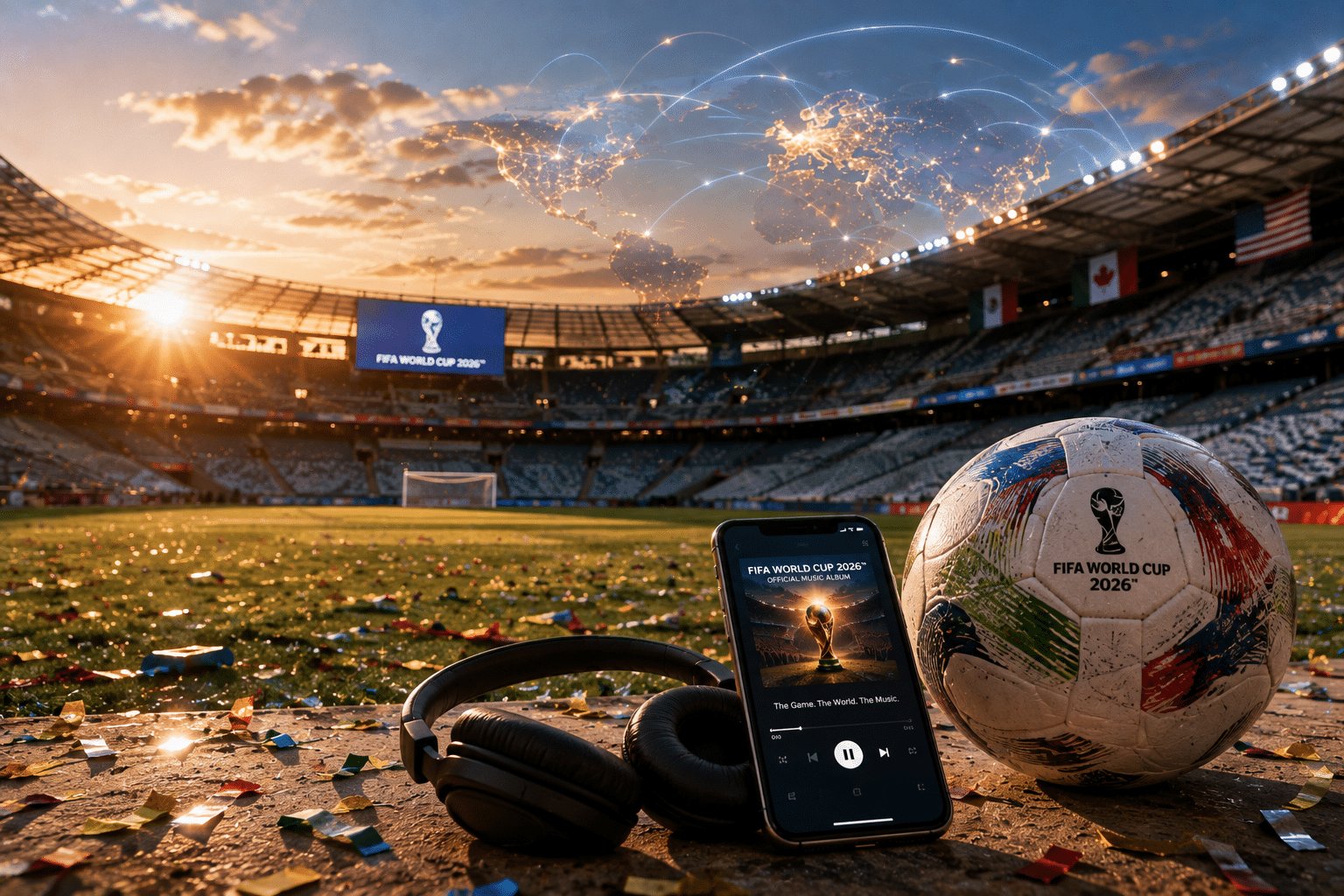
Cultural Impact Cannot Be Measured Only in Streams
Streaming totals provide important evidence of reach, but they cannot measure the album’s entire cultural impact.
A song may matter because it introduces a regional sound to a worldwide audience.
A collaboration may matter because it connects two musical communities.
A performance may become part of a child’s first World Cup memory.
A track may inspire supporters to learn more about an artist, language, or country.
A chorus may become attached to a historic match.
An older fan may hear a new song and remember a World Cup from decades earlier.
These experiences are difficult to reduce to a number.
Cultural impact includes memory, identity, discovery, participation, and emotional association.
The most successful World Cup music does not merely accumulate plays.
It becomes part of how the tournament is remembered.
The Album Extends the Tournament Before and After the Matches
The World Cup schedule has defined beginning and ending dates.
The cultural life of the tournament is much longer.
Music helps begin the experience before the competition starts.
Singles create anticipation. Artist announcements generate discussion. Videos introduce visual themes. Playlists begin circulating. Fans imagine the celebrations that are still ahead.
During the tournament, the songs accumulate meaning.
A track becomes connected to a team, match, city, broadcast sequence, ceremony, or personal memory.
After the final, the music preserves those associations.
The official album therefore performs three distinct functions:
Before the Tournament
It builds anticipation and introduces the event’s cultural identity.
During the Tournament
It unifies broadcasts, celebrations, performances, playlists, and fan experiences.
After the Tournament
It preserves memories and extends the cultural and commercial life of the event.
Very few forms of event content work effectively in all three periods.
Music does.
A New Model for Global Sporting Events
The Official FIFA World Cup 2026™ Music Album may influence how future sporting events approach music.
Instead of treating music as a supporting promotional element, organizers can develop it as a complete creative program.
That program might include:
- Official albums
- Regional editions
- Multilingual releases
- International collaborations
- Live concerts
- Host-city performances
- Artist documentaries
- Fan-created playlists
- Digital experiences
- Virtual performances
- Behind-the-scenes songwriting content
- Educational features about rights and publishing
- Long-term catalog initiatives
This model recognizes that sports and music are not competing for attention.
They are strengthening each other.
Sport provides drama, scale, and shared moments.
Music provides identity, memory, and emotional continuity.
Together, they create an event capable of reaching audiences far beyond the traditional boundaries of either industry.
The World Cup Is Played in Stadiums but Remembered Everywhere
Only a small percentage of the global World Cup audience will enter a tournament stadium.
Millions more will watch from homes, restaurants, public squares, workplaces, schools, fan festivals, mobile devices, and gathering places around the world.
The album belongs to all of them.
It allows the tournament to travel without a ticket.
A supporter can carry the music on a phone, add it to a personal playlist, share it with friends, hear it at a celebration, or return to it years later.
That portability is part of its cultural power.
The trophy will be lifted in one stadium.
The music will be heard in countless places.
More Than a Soundtrack
Calling the Official FIFA World Cup 2026™ Music Album a soundtrack is accurate, but incomplete.
A soundtrack usually supports something else.
This album is also an independent cultural project.
It creates collaborations that may not otherwise have occurred. It introduces audiences to artists and genres. It generates streaming activity, public performances, videos, conversations, and live events. It gives the tournament an emotional presence beyond the matches.
Most importantly, it allows people to participate in the World Cup through music.
They may sing, dance, stream, share, celebrate, discover, or remember.
That participation does not require them to be inside the stadium.
It only requires them to listen.
Music Carries the World Cup Into the Future
Every World Cup eventually becomes history.
The results remain in record books. The images remain in archives. The great performances become part of football legend.
Music preserves something different.
It preserves atmosphere.
A song can bring back the feeling of anticipation before a match, the energy of a crowded public square, the pride of seeing a national team compete, or the joy of celebrating with friends and family.
That is the deeper global impact of the Official FIFA World Cup 2026™ Music Album.
It does not merely accompany the tournament.
It helps the tournament travel across countries, languages, generations, and years.
The matches determine the champion.
The music helps the world remember how the tournament felt.
Celebrating the Music and the People Behind It
Champion Music Publishers salutes FIFA, FIFA Sound, the participating artists, songwriters, composers, producers, publishers, performers, labels, rights organizations, and creative professionals who helped develop the music surrounding the FIFA World Cup 2026™.
Their work demonstrates that an international sporting event can also become a platform for cultural exchange, musical discovery, creative collaboration, and shared human emotion.
The World Cup may begin with football.
Through music, its reach becomes almost limitless.
Explore the songs, performers, and collaborations helping define this historic tournament. Look for the Official FIFA World Cup 2026™ Music Album on Spotify, Apple Music, and other major streaming platforms.
With musical best wishes,
John Francis Krimsky
Founding President
Champion Music Publishers
This article is intended for general educational and commentary purposes and does not constitute legal advice.